
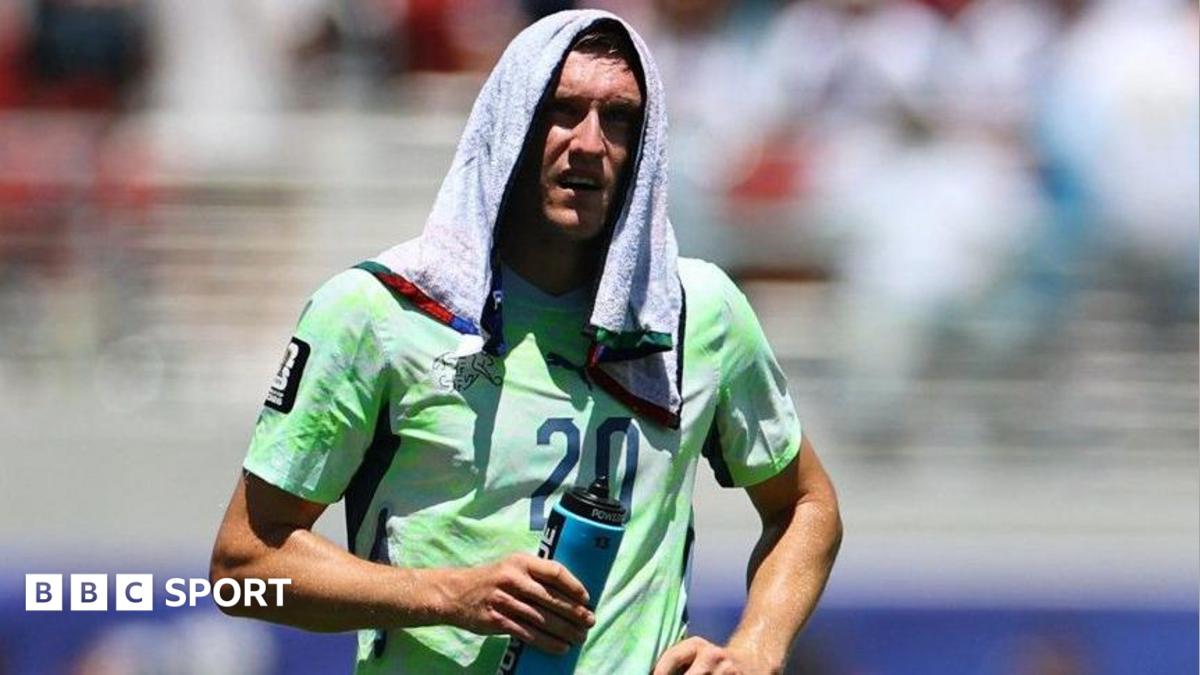
The mandatory hydration breaks introduced at the 2026 FIFA World Cup are becoming one of the tournament's most talked-about topics, with players, coaches, and pundits divided over their impact on matches.
Due to extreme heat and humidity across host countries including the United States, Mexico, and Canada, referees now stop every match midway through each half to allow players to rehydrate. The three-minute breaks were introduced primarily for player safety, but many believe they are also having a significant effect on the flow and outcome of games.
Several teams have benefited immediately after the stoppages. Brazil, for example, struggled against Morocco before a hydration break allowed coach Carlo Ancelotti to gather his players and make tactical adjustments. Shortly after play resumed, Brazil found an equalizer and regained control of the match.
Canada also scored soon after a hydration break in their match against Bosnia-Herzegovina, while Scotland and Australia both found goals shortly after similar stoppages in their respective games.
Many coaches see the breaks as an opportunity to communicate tactical instructions. Ancelotti admitted the pauses allow managers to explain problems, adjust formations, and influence the game in ways that would not normally be possible during continuous play.
However, critics argue that the breaks unfairly benefit teams that are struggling. United States women's coach Emma Hayes described them as "momentum breaks," saying they often help the team under pressure while disrupting the rhythm of the side playing better football.
Former Spain midfielder and World Cup winner Juan Mata also questioned the breaks, saying they interrupt the natural flow of matches. According to him, players generally prefer games to continue without unnecessary stoppages, especially when a team is chasing a goal or trying to maintain control.
The impact has already been visible during the tournament. World Cup newcomers Curacao held Germany at 1-1 before a hydration break, but after play resumed, Germany reorganized and went on to win comfortably. Similar momentum shifts have been seen in matches involving the Czech Republic, South Korea, the Netherlands, and Japan.
While the breaks were introduced to protect players from harsh weather conditions, the debate continues over whether coaches should be allowed to use them for tactical discussions. As the tournament progresses, fans and analysts will be watching closely to see whether hydration breaks continue to influence results and shape the outcome of matches.
For now, what began as a player welfare measure has become one of the most influential and controversial features of the 2026 FIFA World Cup.


0 Comments