
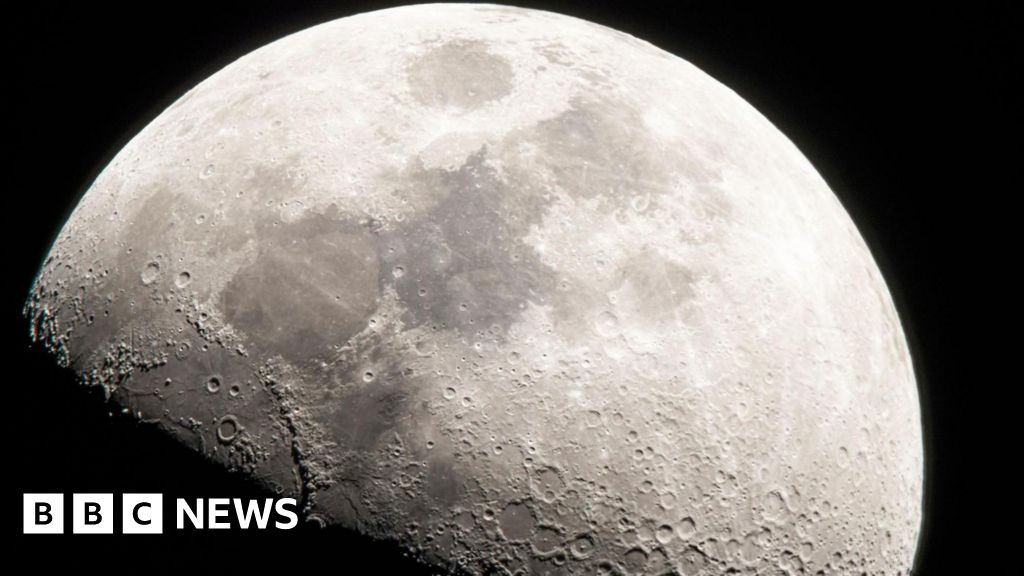
The United States and China are moving closer to a new space race, with both nations pushing ambitious plans to return humans to the Moon and establish long-term bases on its surface.
Amazon founder Jeff Bezos’s space company Blue Origin is among several firms selected by NASA to build advanced lunar landing machines. The goal is to support future missions that will take astronauts back to the Moon before the end of President Donald Trump’s term in 2029.
However, NASA is under growing pressure as China advances its own lunar programme, with plans to land humans on the Moon by 2030. The competition has raised concerns that the US may not be guaranteed to reach the lunar surface first.
China recently launched its Shenzhou-23 spacecraft, sending astronauts to its Tiangong space station as part of its broader space ambitions.
In response, NASA has announced a $20 billion programme aimed at building a permanent Moon base powered by both nuclear and solar energy by 2032. The agency says the project will allow for long-term human presence, scientific research, and potentially future missions to Mars.
NASA administrator Jared Isaacman stated that the US is determined to maintain leadership in space exploration, declaring that America would “never give up the Moon again.”
Despite this confidence, many experts believe the timeline is overly ambitious. Scientists warn that delays in spacecraft development, especially landing systems, could allow China to become the next country to successfully land humans on the Moon.
NASA plans to first deploy robotic landers, drones, and exploration vehicles to study the Moon’s surface before sending astronauts. Companies such as Blue Origin, Intuitive Machines, and Astrobotic have been awarded contracts to build these systems.
The lunar south pole is a key focus due to the presence of frozen water, which could be used for drinking, oxygen production, and fuel.
However, NASA’s progress depends heavily on the success of SpaceX’s Starship Human Landing System, which has experienced repeated delays.
Experts say the biggest challenge is safely landing astronauts on the lunar surface. While political support is strong, technical hurdles remain significant.
As both nations push forward, analysts say the next few years will determine whether the US or China leads the next era of lunar exploration — or whether both arrive almost together in a new chapter of human space history.


0 Comments