
🌅 Good Morning! Here is your latest news update.
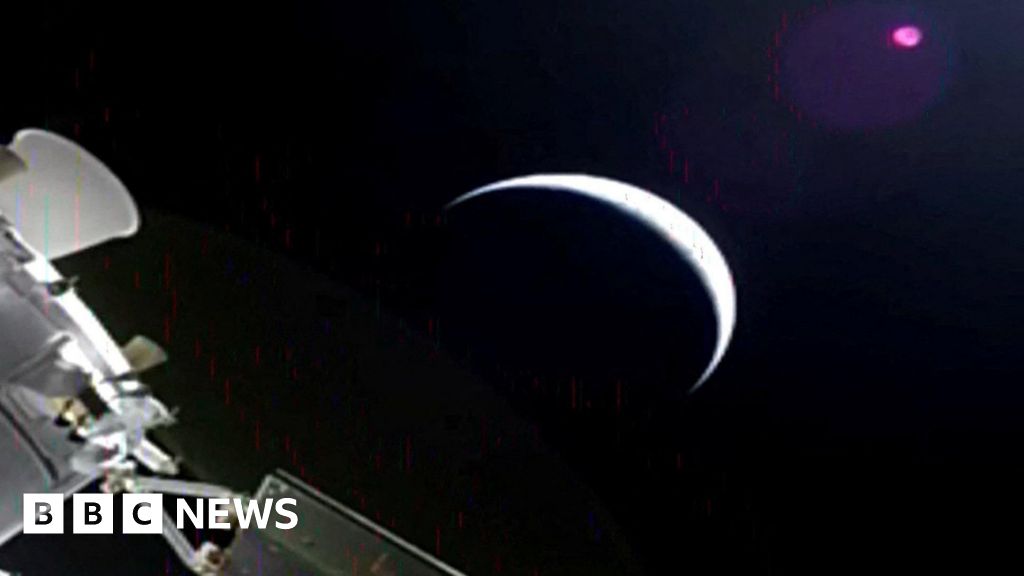
The mission's last, big push on its lunar journey takes humans out of the Earth's orbit for the first time since 1972.
Watch LiveBritish Broadcasting CorporationHomeNewsSportBusinessTechnologyHealthCultureArtsTravelEarthAudioVideoLiveDocumentariesHomeNewsUS & CanadaUKUK PoliticsEnglandN. IrelandN. Ireland PoliticsScotlandScotland PoliticsWalesWales PoliticsAfricaAsiaChinaIndiaAustraliaEuropeLatin AmericaMiddle EastIn PicturesBBC InDepthBBC VerifySportBusinessWorld of BusinessTechnology of BusinessNYSE Opening BellTechnologyWatch DocumentariesArtificial IntelligenceAI v the MindHealthWatch DocumentariesCultureWatch DocumentariesFilm & TVMusicArt & DesignStyleBooksEntertainment NewsArtsWatch DocumentariesArts in MotionTravelWatch DocumentariesDestinationsAfricaAntarcticaAsiaAustralia and PacificCaribbean & BermudaCentral AmericaEuropeMiddle EastNorth AmericaSouth AmericaWorld’s TableCulture & ExperiencesAdventuresThe SpeciaListEarthWatch DocumentariesScienceNatural WondersClimate SolutionsSustainable BusinessGreen LivingAudioPodcast CategoriesRadioAudio FAQsVideoWatch DocumentariesBBC MaestroDiscover the WorldLiveLive NewsLive SportDocumentariesHomeNewsSportBusinessTechnologyHealthCultureArtsTravelEarthAudioVideoLiveDocumentariesWeatherNewslettersWatch LiveArtemis II blasts ever closer to the far side of the Moon1 hour agoShareSaveAdd as preferred on GooglePallab Ghosh,Science Correspondent, Cape Canaveral,Alison Francis,Senior Science Journalist,Kevin ChurchandEmily SelvaduraiGettyThe Orion spacecraft thrusts out of Earth orbit and on to the Moon (artwork)The four astronauts on the Artemis II mission have now left the Earth's orbit, after their Orion spacecraft fired its main engine for a final push towards the Moon.
The five minute and 55 second engine burn, known as the translunar injection (TLI), went "flawlessly", Nasa's Dr Lori Glaze said afterwards.
And from the Orion capsule, Canadian astronaut Jeremy Hansen said the crew was "feeling pretty good up here on our way to the Moon".
Artemis II is now on a looping path that will carry the crew around the far side of the Moon and back again. It is the first time since 1972 that humans have travelled outside of the Earth's orbit.
On the livestream from Orion, Earth is slowly shrinking, as the capsule moves further and further into space.
Hansen, who is the first non-American to travel to the Moon - told Nasa's mission control that the crew "firmly felt the power" of those who have persevered and worked so hard on this mission.
"Humanity has once again shown what we are capable of," he said. "It's your hopes for the future that carry us now on this journey around the Moon."
After spending roughly a day in a stretched‑out "high Earth orbit", Orion's engines, navigation and life-support systems were checked, while the capsule looped our planet.
At last, the final approval was given, and the engine burn could begin - the mission's last, big move towards the Moon.
Behind the crew's seats, the service module lit its single main engine in a long, steady push that added thousands of kilometres per hour to Orion's speed.
The TLI propelled the spacecraft on a journey that is expected to carry the crew farther from Earth than anyone has been before - more than 4,700 miles (7,600 km) beyond the Moon - before gravity swings them back.
Nasa estimates that this could edge past the record set by Apollo 13 in 1970, depending on the fine details of the timing and trajectory.
TLI is not a


0 Comments