
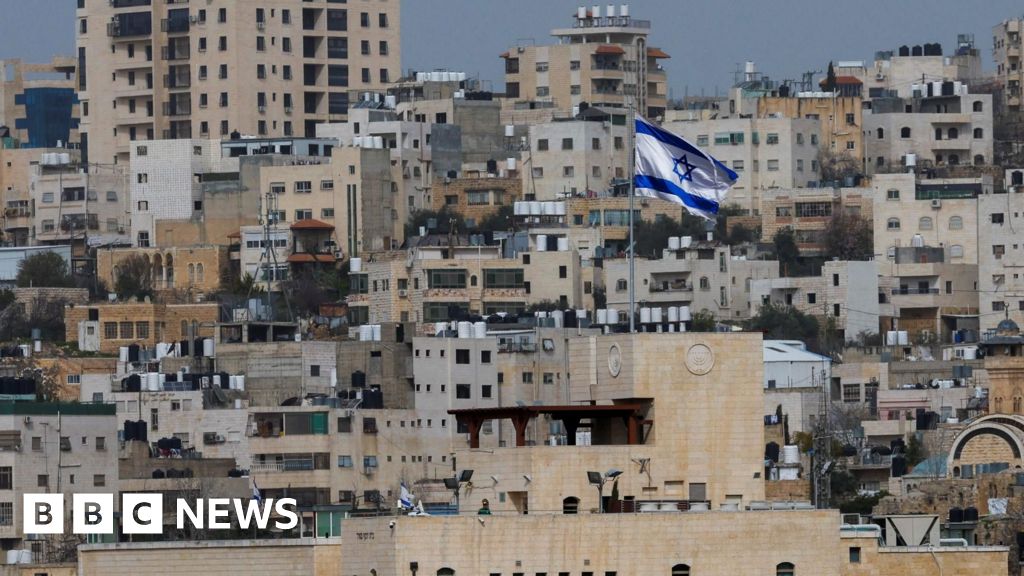
Palestinians say an Israeli power grab shuts them out of decisions on planning and development in West Bank.
Watch LiveBritish Broadcasting CorporationHomeNewsSportBusinessTechnologyHealthCultureArtsTravelEarthAudioVideoLiveDocumentariesHomeNewsUS & CanadaUKUK PoliticsEnglandN. IrelandN. Ireland PoliticsScotlandScotland PoliticsWalesWales PoliticsAfricaAsiaChinaIndiaAustraliaEuropeLatin AmericaMiddle EastIn PicturesBBC InDepthBBC VerifySportBusinessWorld of BusinessTechnology of BusinessNYSE Opening BellTechnologyWatch DocumentariesArtificial IntelligenceAI v the MindHealthWatch DocumentariesCultureWatch DocumentariesFilm & TVMusicArt & DesignStyleBooksEntertainment NewsArtsWatch DocumentariesArts in MotionTravelWatch DocumentariesDestinationsAfricaAntarcticaAsiaAustralia and PacificCaribbean & BermudaCentral AmericaEuropeMiddle EastNorth AmericaSouth AmericaWorld’s TableCulture & ExperiencesAdventuresThe SpeciaListEarthWatch DocumentariesScienceNatural WondersClimate SolutionsSustainable BusinessGreen LivingAudioPodcast CategoriesRadioAudio FAQsVideoWatch DocumentariesBBC MaestroDiscover the WorldLiveLive NewsLive SportDocumentariesHomeNewsSportBusinessTechnologyHealthCultureArtsTravelEarthAudioVideoLiveDocumentariesWeatherNewslettersWatch Live'We are not protected' says Hebron mayor as Israel expands West Bank control10 hours agoShareSaveLucy WilliamsonMiddle East correspondent, HebronShareSaveReutersAbout 800 Jewish settlers live among 33,000 Palestinians in the H2 area of HebronA Palestinian official in the occupied West Bank has described Israel's latest expansion of control there as "the end of the road" for negotiations between Israelis and Palestinians.
Asma al-Sharabati, acting mayor of Hebron, said new legal changes recently announced by Israeli cabinet ministers would leave Palestinian authorities shut out of decisions on urban planning and development, even in areas under Palestinian control.
Hebron is a regular flashpoint in the West Bank - a divided city, where soldiers guard hundreds of Israeli settlers living alongside Palestinians in an Israeli military garrison.
On Sunday, the Israeli security cabinet passed major changes to the established division of powers in the West Bank, set up three decades ago under the US-backed Oslo Accords, signed by both Israeli and Palestinian leaders.
They include expanding Israeli control beyond its military occupation, into the provision of municipal services in Palestinian-run areas, as well as broad powers to take over so-called "heritage sites" across the West Bank – to protect water, environmental and archaeological resources, they say.
Israel also says it will take over planning authority at the Cave of the Patriarchs in Hebron, one of the holiest sites in Judaism, which sits inside the city's Ibrahimi Mosque.
"Now they can simply put their hands on any building and declare it is ancient, and the Palestinian authorities are not part of any decision on urban planning or development of the area," said al-Sharabati.
She told us she had not received any formal notification of Israel's plans, and was picking up the details from Israeli news.
A few metres from Hebron's bustling vegetable market, through the grey steel gates of the Israeli checkpoint, is a tense and deserted landscape, where Palestinian shops are shuttered, and streets closed off to protect Israeli settlers.
Issa Amro, a Palestinian activist, lives inside that volatile divided area, known as H2. The long and winding route to his house takes


0 Comments