
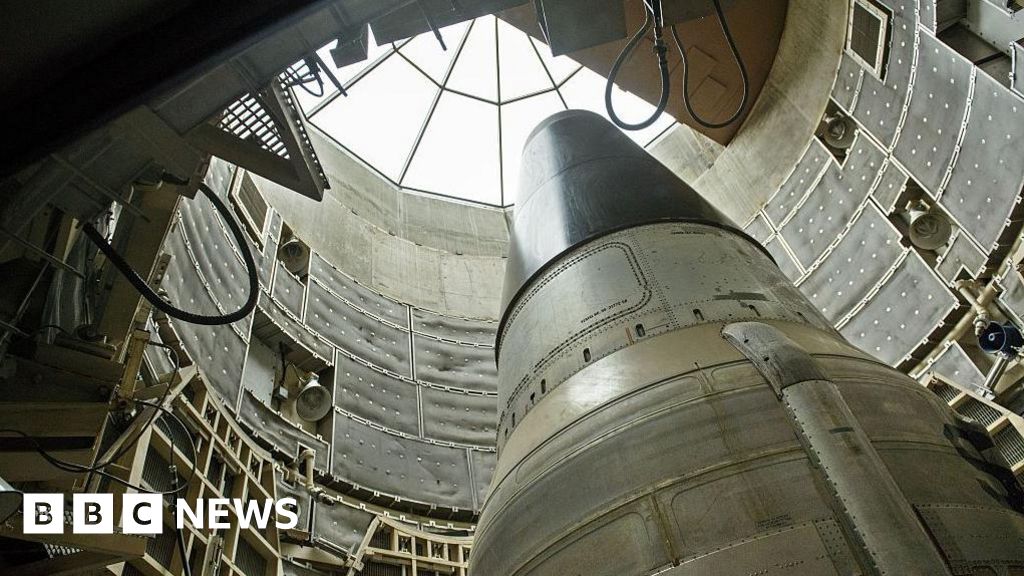
The New Start treaty has limited the number of deployed strategic nuclear warheads for both countries.
Watch LiveBritish Broadcasting CorporationHomeNewsSportBusinessTechnologyHealthCultureArtsTravelEarthAudioVideoLiveDocumentariesHomeNewsUS & CanadaUKUK PoliticsEnglandN. IrelandN. Ireland PoliticsScotlandScotland PoliticsWalesWales PoliticsAfricaAsiaChinaIndiaAustraliaEuropeLatin AmericaMiddle EastIn PicturesBBC InDepthBBC VerifySportBusinessWorld of BusinessTechnology of BusinessNYSE Opening BellTechnologyWatch DocumentariesArtificial IntelligenceAI v the MindHealthWatch DocumentariesCultureWatch DocumentariesFilm & TVMusicArt & DesignStyleBooksEntertainment NewsArtsWatch DocumentariesArts in MotionTravelWatch DocumentariesDestinationsAfricaAntarcticaAsiaAustralia and PacificCaribbean & BermudaCentral AmericaEuropeMiddle EastNorth AmericaSouth AmericaWorld’s TableCulture & ExperiencesAdventuresThe SpeciaListEarthWatch DocumentariesScienceNatural WondersClimate SolutionsSustainable BusinessGreen LivingAudioPodcast CategoriesRadioAudio FAQsVideoWatch DocumentariesBBC MaestroDiscover the WorldLiveLive NewsLive SportDocumentariesHomeNewsSportBusinessTechnologyHealthCultureArtsTravelEarthAudioVideoLiveDocumentariesWeatherNewslettersWatch LiveFears of new arms race as US-Russia nuclear weapons treaty due to expire56 minutes agoShareSaveJonathan BealeDefence correspondentShareSaveAFP via Getty ImagesThe New Start treaty caps the number of deployed strategic nuclear warheads for the US and Russia to 1,550 eachThe last nuclear weapons control treaty between the US and Russia is due to expire on Thursday, raising fears of a new arms race.
The Strategic Arms Reduction Treaty, known as "New START" and signed in 2010 was one of a handful of agreements designed to help prevent a catastrophic nuclear war.
The treaty capped the number of deployed strategic nuclear warheads for each party to 1,550. It also established some transparency including data transfer, notifications and on site inspections.
The treaty's expiry effectively marks an end to the arms control co-operation between Washington and Moscow that helped bring an end to the Cold War.
On Wednesday, Pope Leo urged the US and Russia to renew the treaty, saying the current world situation required "calls for doing everything possible to avert a new arms race".
The original Start treaty - signed in 1991 by the US and the Soviet Union - barred each of the two signatories from deploying more than 6,000 nuclear warheads.
It was succeeded by New Start signed in 2010 in Prague by the US and Russia, the successor state to the dissolved Soviet Union.
Despite a technical suspension three years ago, both countries were still thought to be abiding by the treaty.
The agreement prevented the uncontrolled build-up of nuclear weapons and provided the two countries with the largest nuclear arsenals with transparency measures to avoid misjudging each other's intentions.
Its expiry follows a worrying pattern. Other long-standing arms control treaties have already fallen by the wayside.
Britain's former head of the armed forces, Admiral Sir Tony Radakin has warned that the architecture and frameworks that helped keep the world safe "now risks unravelling".
In a speech last year he described the collapse of these key arms control treaties as "one of the most dangerous aspects of our current global security", along with "the increasing prominence of nuclear weapons".
Russia's Dmitry Medvedev, who as the then pre


0 Comments