
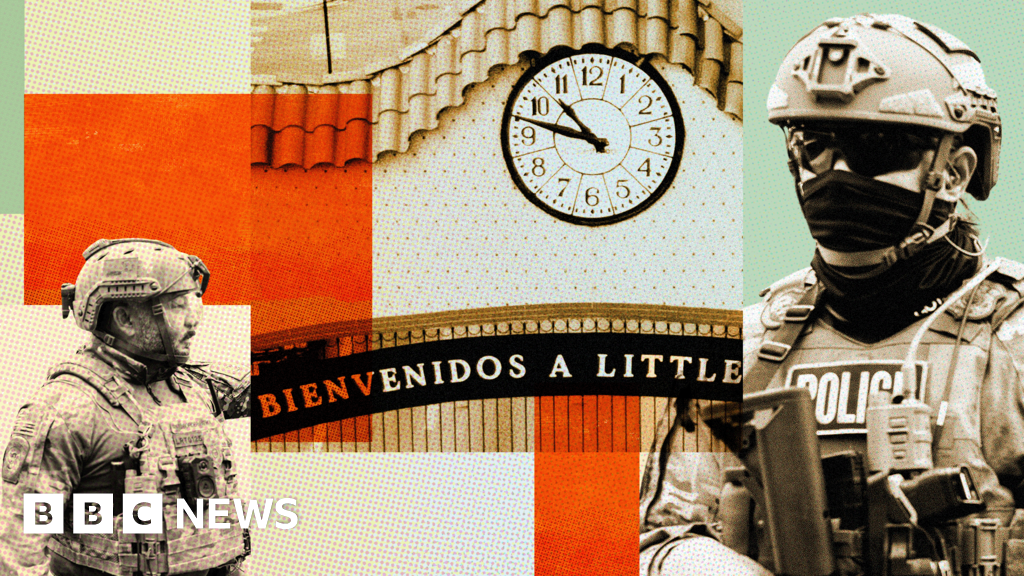
Businesses in Little Village - known as the "Mexico of the Midwest" - are suffering after weeks of immigration raids.
Watch LiveBritish Broadcasting CorporationHomeNewsSportBusinessInnovationHealthCultureArtsTravelEarthAudioVideoLiveDocumentariesHomeNewsUS & CanadaUKUK PoliticsEnglandN. IrelandN. Ireland PoliticsScotlandScotland PoliticsWalesWales PoliticsAfricaAsiaChinaIndiaAustraliaEuropeLatin AmericaMiddle EastIn PicturesBBC InDepthBBC VerifySportBusinessWorld of BusinessTechnology of BusinessNYSE Opening BellInnovationWatch DocumentariesTechnologyScienceArtificial IntelligenceAI v the MindHealthWatch DocumentariesCultureWatch DocumentariesFilm & TVMusicArt & DesignStyleBooksEntertainment NewsArtsWatch DocumentariesArts in MotionTravelWatch DocumentariesDestinationsAfricaAntarcticaAsiaAustralia and PacificCaribbean & BermudaCentral AmericaEuropeMiddle EastNorth AmericaSouth AmericaWorld’s TableCulture & ExperiencesAdventuresThe SpeciaListEarthWatch DocumentariesNatural WondersWeather & ScienceClimate SolutionsSustainable BusinessGreen LivingAudioPodcast CategoriesRadioAudio FAQsVideoWatch DocumentariesBBC MaestroDiscover the WorldLiveLive NewsLive SportDocumentariesHomeNewsSportBusinessInnovationHealthCultureArtsTravelEarthAudioVideoLiveDocumentariesWeatherNewslettersWatch LiveAfter ICE raids... a once bustling Chicago neighbourhood has changed8 hours agoShareSaveBlanca EstradaChicagoShareSaveGetty ImagesA local shop worker walks by 26th Street in Little VillageFor weeks, all eyes have been on Minneapolis where the anger at the killing of two US citizens by federal immigration agents has turned the Midwestern city into a sea of unrest.
President Donald Trump has pledged to "de-escalate" the situation and the new man in charge on the ground, Tom Homan, said on Thursday that there will eventually be a "drawdown" in numbers.
Chicago has already seen a surge of immigration agents, and a crackdown on its streets, ease somewhat.
Operation Midway Blitz was launched in September with the aim, the Trump administration said, of targeting "criminal illegal aliens" and it peaked in the weeks that followed.
Since then, Chicago and specifically its Hispanic neighbourhoods have had to adjust to a new normal.
In Little Village - often referred to as the "Mexican Magnificent Mile" - the fear of raids has caused people to stay indoors, turning one of Chicago's key economic hubs into something resembling a ghost town, business owners and city officials say.
"Business has dropped half during the week, sometimes even more than that. People don't want to spend money," says Carlos Macias, who owns the grocery shop and restaurant Carniceria y Taqueria Aguascalientes, which his father opened 50 years ago on 26th Street, the main thoroughfare.
Macias remembers how a raid on his own shop spread fear in the community. The agents wore balaclavas partially covering their faces, he says, and some carried rifles while others had handguns in their holsters.
As they moved through the space, they scanned the room, making eye contact with employees and customers, some people ducked under tables, he recalls, and some began to cry. Others ran towards the back of the building, unsure of the men's intentions. As the tension rose, Macias stepped in.
"This is my property," Macias told them. "You're not allowed in here."
His words had little effect. The incident is still etched in his brain, and one of the reasons he believes that business has slowed.
Watch: Footage sh


0 Comments