
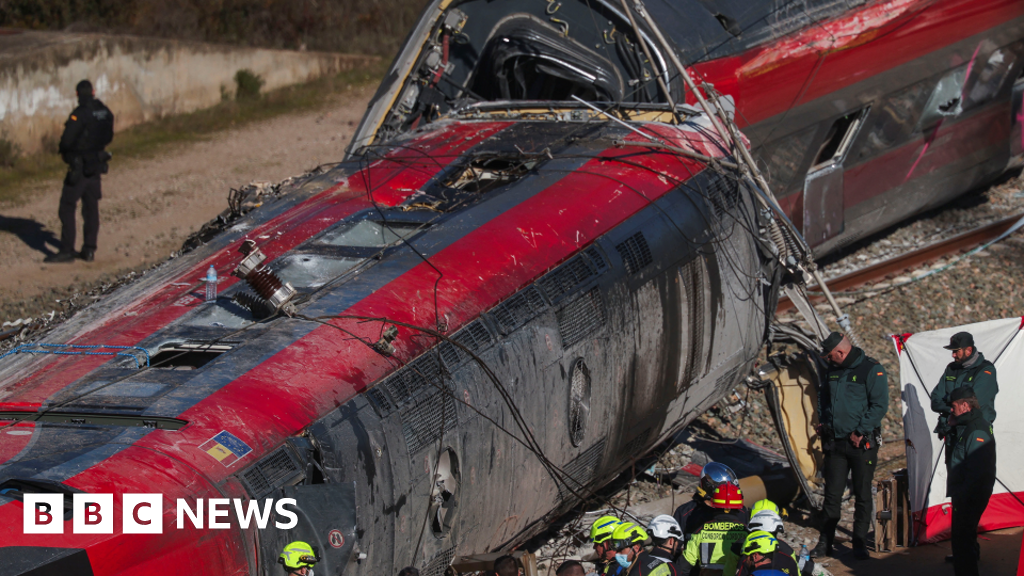
At least 39 people have died in what local officials are calling Spain's worst rail crash in more than a decade.
Watch LiveBritish Broadcasting CorporationHomeNewsSportBusinessInnovationHealthCultureArtsTravelEarthAudioVideoLiveDocumentariesHomeNewsIsrael-Gaza WarWar in UkraineUS & CanadaUKUK PoliticsEnglandN. IrelandN. Ireland PoliticsScotlandScotland PoliticsWalesWales PoliticsAfricaAsiaChinaIndiaAustraliaEuropeLatin AmericaMiddle EastIn PicturesBBC InDepthBBC VerifySportBusinessExecutive LoungeTechnology of BusinessFuture of BusinessInnovationWatch DocumentariesTechnologyScienceArtificial IntelligenceAI v the MindHealthWatch DocumentariesCultureWatch DocumentariesFilm & TVMusicArt & DesignStyleBooksEntertainment NewsArtsWatch DocumentariesArts in MotionTravelWatch DocumentariesDestinationsAfricaAntarcticaAsiaAustralia and PacificCaribbean & BermudaCentral AmericaEuropeMiddle EastNorth AmericaSouth AmericaWorld’s TableCulture & ExperiencesAdventuresThe SpeciaListEarthWatch DocumentariesNatural WondersWeather & ScienceClimate SolutionsSustainable BusinessGreen LivingAudioPodcast CategoriesRadioAudio FAQsVideoWatch DocumentariesBBC MaestroDiscover the WorldLiveLive NewsLive SportDocumentariesHomeNewsSportBusinessInnovationHealthCultureArtsTravelEarthAudioVideoLiveDocumentariesWeatherNewslettersWatch LiveWhat we know about the Spain train crashJust nowShareSaveSofia Ferreira SantosandAlicia CurryShareSaveGUARDIA CIVIL HANDOUT/EPAAt least 39 people have died and dozens more have been injured after two high-speed trains collided in southern Spain, the country's Civil Guard has said.
The accident near the city of Córdoba, in southern Spain, has been described by local officials as Spain's worst rail crash in more than a decade.
Later on Monday, Spanish Prime Minister Pedro Sánchez is expected to visit the scene, where rescue efforts remain ongoing, local media report.
Here's what we know about the incident so far.
The crash occurred at around 19:45 local time (18:45 GMT) on Sunday, about an hour after one of the trains departed Málaga for Madrid.
The train derailed and crossed over to the opposite track, operator Adif said.
It then collided with an oncoming train travelling from south Madrid to Huelva, which was forced into an embankment running alongside the track, Spain's Transport Minister Óscar Puente said on Sunday.
The majority of those killed and injured were in the front carriages of the Huelva-bound train, he added.
Officials say an investigation has been launched but it is not expected to determine what happened for at least a month.
Puente has described the crash as "extremely strange" and said all the railway experts consulted by the government "are extremely baffled by the accident".
The president of Spain's state-owned rail operator, Renfe, said he had "discarded" the possibility that the incident occureed due to excessive speed or human error.
Álvaro Fernández Heredia told Spain's national radio RNE that even if a mistake had been made, a system within the train would have fixed it.
He added that both trains were travelling under the maximum speed limit on the stretch of track where the crash happened.
He suggested a mechanical fault or an infrastructure issue was a more likely cause.
There were around 400 passengers and staff on the two trains, operated by Iryo and Alvia, according to a statement from Renfe.
It is not clear if there are people still trapped inside the carriages but rescue teams are on site.
"The problem is that the


0 Comments