
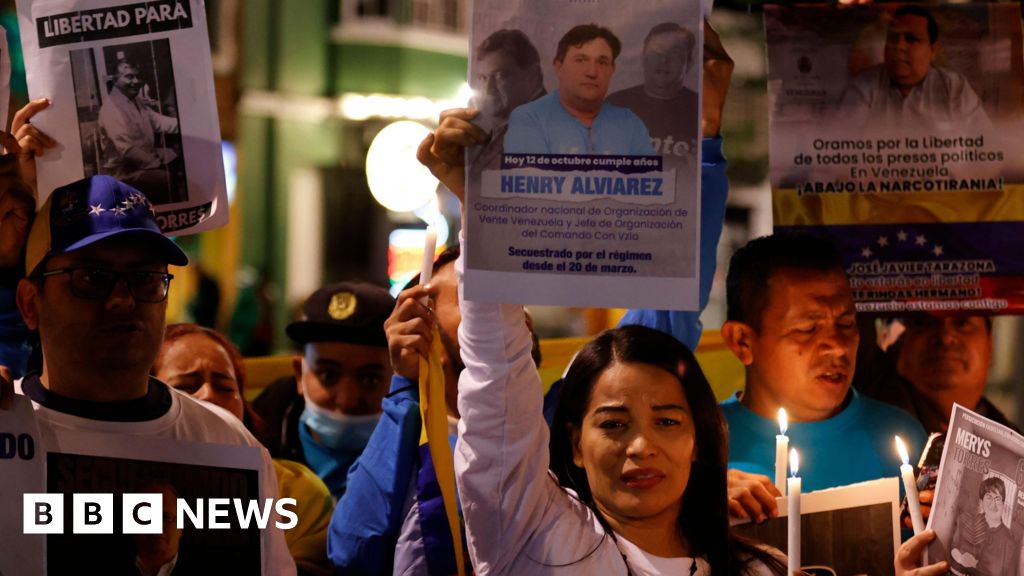
The US, which recently captured its President Nicolás Maduro, has long demanded the detainees be freed.
Watch LiveBritish Broadcasting CorporationHomeNewsSportBusinessInnovationHealthCultureArtsTravelEarthAudioVideoLiveDocumentariesHomeNewsIsrael-Gaza WarWar in UkraineUS & CanadaUKUK PoliticsEnglandN. IrelandN. Ireland PoliticsScotlandScotland PoliticsWalesWales PoliticsAfricaAsiaChinaIndiaAustraliaEuropeLatin AmericaMiddle EastIn PicturesBBC InDepthBBC VerifySportBusinessExecutive LoungeTechnology of BusinessFuture of BusinessInnovationWatch DocumentariesTechnologyScienceArtificial IntelligenceAI v the MindHealthWatch DocumentariesCultureWatch DocumentariesFilm & TVMusicArt & DesignStyleBooksEntertainment NewsArtsWatch DocumentariesArts in MotionTravelWatch DocumentariesDestinationsAfricaAntarcticaAsiaAustralia and PacificCaribbean & BermudaCentral AmericaEuropeMiddle EastNorth AmericaSouth AmericaWorld’s TableCulture & ExperiencesAdventuresThe SpeciaListEarthWatch DocumentariesNatural WondersWeather & ScienceClimate SolutionsSustainable BusinessGreen LivingAudioPodcast CategoriesRadioAudio FAQsVideoWatch DocumentariesBBC MaestroDiscover the WorldLiveLive NewsLive SportDocumentariesHomeNewsSportBusinessInnovationHealthCultureArtsTravelEarthAudioVideoLiveDocumentariesWeatherNewslettersWatch LiveVenezuelan government begins releasing political prisoners2 hours agoShareSaveWill Grant,Central America correspondentandOlivia IrelandShareSaveEPAProtesters in Colombia have been calling for the release of political prisoners in VenezuelaThe Venezuelan government has started releasing detainees considered political prisoners by human rights groups, in what officials described as a goodwill gesture.
Spain's foreign ministry said five of its nationals had been released. Among them is prominent Venezuelan-Spanish rights activist, Rocío San Miguel, her family confirmed to US media.
The move comes after the US seized Venezuela's President Nicolás Maduro in a raid on the capital, Caracas, on Saturday, to face drug trafficking charges in New York.
US President Donald Trump wrote on Truth Social that the release of political prisoners - which has been a long-held US demand - was "a very important and smart gesture" from Venezuela.
Trump added that Venezuela released the prisoners as a sign of "seeking peace" and as a result, he had cancelled a "previously expected second wave of attacks" on the country.
Jorge Rodríguez, the head of Venezuela's National Assembly and the brother of its interim president Delcy Rodríguez, announced on state television that "a significant number" would be released immediately, without specifying the number or identity of prisoners being freed.
Hundreds of political prisoners are detained in Venezuelan prisons, with only a handful thought to have been released so far.
Jorge Rodríguez said the interim government was releasing them in the interest of "national unity and peaceful coexistence".
Rocío San Miguel, a vocal critic of Maduro and a defence expert, was the first prisoner confirmed to be freed. Her family told the New York Times that she was taken to the Spanish embassy in Caracas.
Arrested in 2024, she was accused of being involved in a plot to kill the then-president and faced charges of treason, conspiracy and terrorism. Her arrest shocked human rights activists and, because her whereabouts were unknown, was labelled as potential "enforced disappearance" by the UN Human Rights Office.
Venezuelan human rights orga


0 Comments