
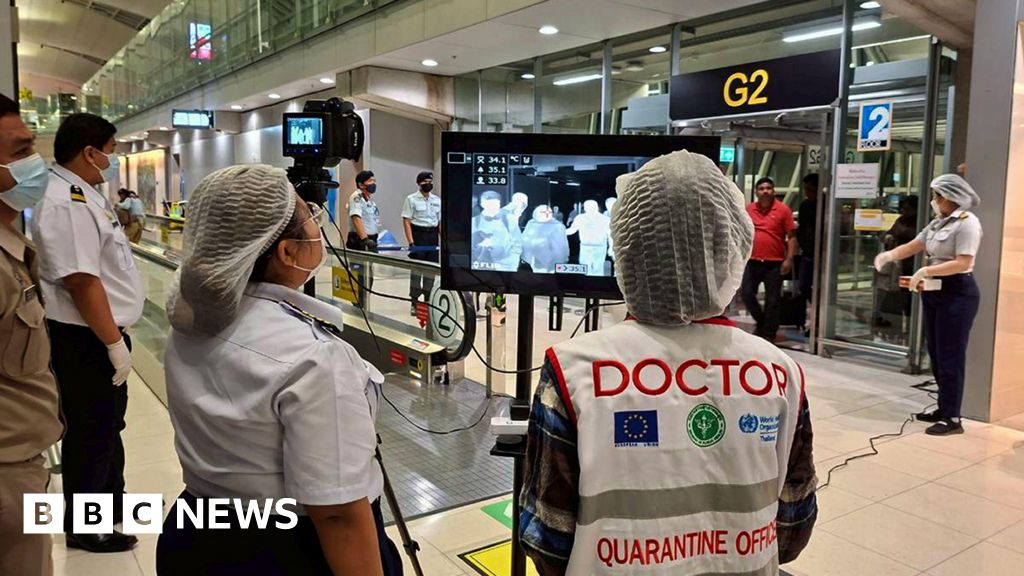
Airports in Thailand and Nepal have begun screening passengers from West Bengal.
Watch LiveBritish Broadcasting CorporationHomeNewsSportBusinessInnovationHealthCultureArtsTravelEarthAudioVideoLiveDocumentariesHomeNewsIsrael-Gaza WarWar in UkraineUS & CanadaUKUK PoliticsEnglandN. IrelandN. Ireland PoliticsScotlandScotland PoliticsWalesWales PoliticsAfricaAsiaChinaIndiaAustraliaEuropeLatin AmericaMiddle EastIn PicturesBBC InDepthBBC VerifySportBusinessWorld of BusinessTechnology of BusinessNYSE Opening BellInnovationWatch DocumentariesTechnologyScienceArtificial IntelligenceAI v the MindHealthWatch DocumentariesCultureWatch DocumentariesFilm & TVMusicArt & DesignStyleBooksEntertainment NewsArtsWatch DocumentariesArts in MotionTravelWatch DocumentariesDestinationsAfricaAntarcticaAsiaAustralia and PacificCaribbean & BermudaCentral AmericaEuropeMiddle EastNorth AmericaSouth AmericaWorld’s TableCulture & ExperiencesAdventuresThe SpeciaListEarthWatch DocumentariesNatural WondersWeather & ScienceClimate SolutionsSustainable BusinessGreen LivingAudioPodcast CategoriesRadioAudio FAQsVideoWatch DocumentariesBBC MaestroDiscover the WorldLiveLive NewsLive SportDocumentariesHomeNewsSportBusinessInnovationHealthCultureArtsTravelEarthAudioVideoLiveDocumentariesWeatherNewslettersWatch LiveNipah virus outbreak in India triggers Asia airport screenings4 hours agoShareSaveKelly NgShareSaveEPAThe Nipah virus can spread from animals to humans.An outbreak of the deadly Nipah virus in India's West Bengal state has sparked concern in parts of Asia, with some tightening screening measures at airports.
Thailand has started screening passengers at three airports that receive flights from West Bengal. Nepal has also begun screening arrivals at Kathmandu airport and other land border points with India.
Five healthcare workers in West Bengal were infected by the virus early this month, one of whom is in a critical condition. Some 110 people who were in contact with them have been quarantined.
The virus can spread from animals to humans. It has a high death range – ranging from 40% to 75% – as there is no vaccine or medicine to treat it.
The Nipah virus can be transmitted from animals, like pigs and fruit bats, to humans. It can also spread person-to-person through contaminated food.
The World Health Organization has described Nipah in its top ten priority diseases, along with pathogens like Covid-19 and Zika, because of its potential to trigger an epidemic.
People who contract the virus show a wide range of symptoms, or sometimes, none at all.
Initial symptoms may include fever, headaches, muscle pain, vomiting and sore throat. In some people, these may be followed by drowsiness, altered consciousness, and pneumonia.
Encephalitis, a sometimes-fatal condition that causes inflammation of the brain, may occur in severe cases.
To date, no drugs of vaccines have been approved to treat the disease.
The first recognised Nipah outbreak was in 1998 among pig farmers in Malaysia and later spread to neighbouring Singapore. The virus got its name from the village where it was first discovered.
More than 100 people were killed and a million pigs culled in an effort to contain the virus. It also resulted in significant economic losses for farmers and those in the livestock trade.
Bangladesh has borne the brunt in recent years, with more than 100 people dying of Nipah since 2001.
The virus has also been detected in India. Outbreaks were reported in West Bengal in 2001 and 2007.
More recently, the southern state of Ker


0 Comments