
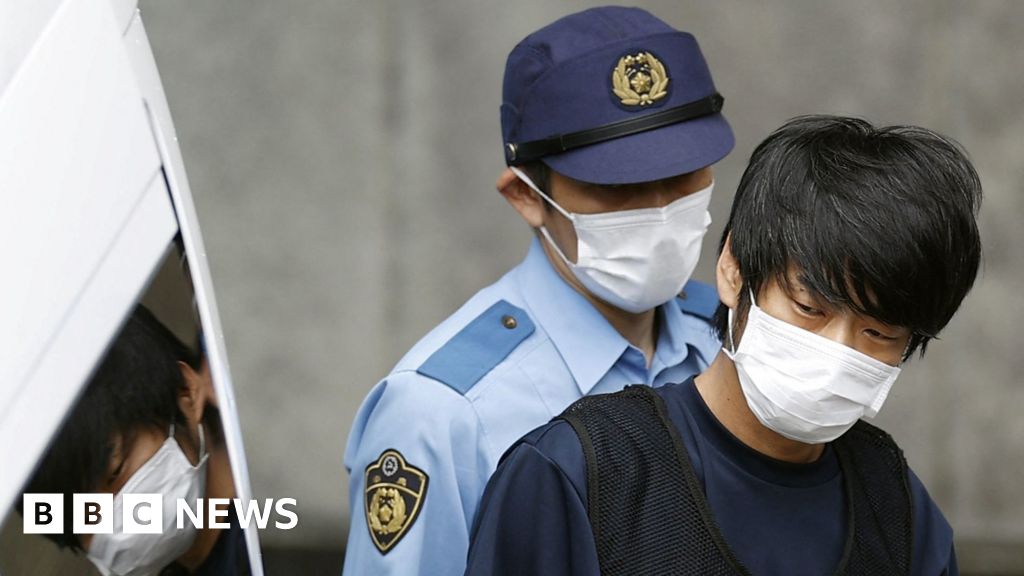
Abe's assassination stunned the country where there is virtually no gun crime.
Watch LiveBritish Broadcasting CorporationHomeNewsSportBusinessInnovationHealthCultureArtsTravelEarthAudioVideoLiveDocumentariesHomeNewsIsrael-Gaza WarWar in UkraineUS & CanadaUKUK PoliticsEnglandN. IrelandN. Ireland PoliticsScotlandScotland PoliticsWalesWales PoliticsAfricaAsiaChinaIndiaAustraliaEuropeLatin AmericaMiddle EastIn PicturesBBC InDepthBBC VerifySportBusinessExecutive LoungeTechnology of BusinessFuture of BusinessInnovationWatch DocumentariesTechnologyScienceArtificial IntelligenceAI v the MindHealthWatch DocumentariesCultureWatch DocumentariesFilm & TVMusicArt & DesignStyleBooksEntertainment NewsArtsWatch DocumentariesArts in MotionTravelWatch DocumentariesDestinationsAfricaAntarcticaAsiaAustralia and PacificCaribbean & BermudaCentral AmericaEuropeMiddle EastNorth AmericaSouth AmericaWorld’s TableCulture & ExperiencesAdventuresThe SpeciaListEarthWatch DocumentariesNatural WondersWeather & ScienceClimate SolutionsSustainable BusinessGreen LivingAudioPodcast CategoriesRadioAudio FAQsVideoWatch DocumentariesBBC MaestroDiscover the WorldLiveLive NewsLive SportDocumentariesHomeNewsSportBusinessInnovationHealthCultureArtsTravelEarthAudioVideoLiveDocumentariesWeatherNewslettersWatch LiveLife sentence for man who killed Japan's ex-PM Shinzo Abe53 minutes agoShareSaveHideharu Tamura,TokyoandKelly Ng,SingaporeShareSaveReutersTetsuya Yamagami was arrested in 2022 shortly after the assassinationThe man who killed Japan's former prime minister Shinzo Abe has been sentenced to life in prison, three and a half years after he shot him dead at a rally in the city of Nara in 2022.
Tetsuya Yamagami had pleaded guilty to murder charges at the trial's opening last year, but how he should be punished has divided public opinion in Japan. While many see the 45-year-old as a cold-blooded murderer, some sympathise with his troubled upbringing.
Prosecutors said Yamagami deserved life imprisonment for his "grave act". Abe's assassination stunned the country, where there is virtually no gun crime.
Seeking leniency, Yamagami's defence team said he was a victim of "religious abuse".
His mother's devotion to the Unification Church bankrupted the family, and Yamagami bore a grudge against Abe after realising the ex-leader's ties to the controversial church, the court heard.
On Wednesday, Judge Shinichi Tanaka from the Nara district court said the fact that Yamagami "shot [Abe] from behind... when he was least expecting it" showed how "despicable and extremely malicious" his actions were, AFP news agency reported.
Yamagami sat quietly with his hands clasped and eyes downcast as the sentence was handed down. Nearly 700 people had lined up outside the courtroom to attend the hearing.
Abe's shocking death in broad daylight prompted investigations into the Unification Church and its questionable practices, including soliciting financially ruinous donations from its followers.
The case also exposed links with politicians from Japan's ruling Liberal Democratic Party and resulted in the resignations of several cabinet ministers.
Journalist Eito Suzuki, who covered all but one of Yamagami's court hearings, said Yamagami and his family seemed "overwhelmed with despair" throughout the trial.
Yamagami "exuded a sense of world-weariness and resignation", recounts Suzuki, who began looking into the Unification Church long befo


0 Comments