
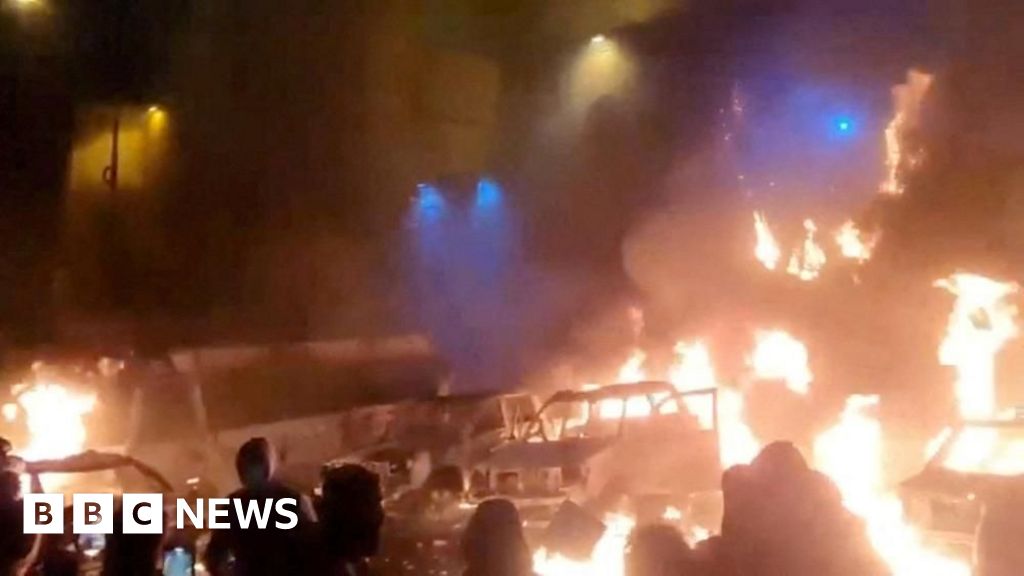
There were signs authorities were intensifying their crackdown as protests entered their second week.
Watch LiveBritish Broadcasting CorporationHomeNewsSportBusinessInnovationHealthCultureArtsTravelEarthAudioVideoLiveDocumentariesHomeNewsIsrael-Gaza WarWar in UkraineUS & CanadaUKUK PoliticsEnglandN. IrelandN. Ireland PoliticsScotlandScotland PoliticsWalesWales PoliticsAfricaAsiaChinaIndiaAustraliaEuropeLatin AmericaMiddle EastIn PicturesBBC InDepthBBC VerifySportBusinessExecutive LoungeTechnology of BusinessFuture of BusinessInnovationWatch DocumentariesTechnologyScienceArtificial IntelligenceAI v the MindHealthWatch DocumentariesCultureWatch DocumentariesFilm & TVMusicArt & DesignStyleBooksEntertainment NewsArtsWatch DocumentariesArts in MotionTravelWatch DocumentariesDestinationsAfricaAntarcticaAsiaAustralia and PacificCaribbean & BermudaCentral AmericaEuropeMiddle EastNorth AmericaSouth AmericaWorld’s TableCulture & ExperiencesAdventuresThe SpeciaListEarthWatch DocumentariesNatural WondersWeather & ScienceClimate SolutionsSustainable BusinessGreen LivingAudioPodcast CategoriesRadioAudio FAQsVideoWatch DocumentariesBBC MaestroDiscover the WorldLiveLive NewsLive SportDocumentariesHomeNewsSportBusinessInnovationHealthCultureArtsTravelEarthAudioVideoLiveDocumentariesWeatherNewslettersWatch LiveIran medics describe overwhelmed hospitals as protests enter second week57 minutes agoShareSaveHelen Sullivan,BBC NewsandSoroush Negahdari & Roja Asadi,BBC News PersianShareSaveReutersBurning vehicles were pictured in Tehran on Friday nightAs protests in Iran entered their second week and Iranian authorities issued coordinated warnings to protesters, a doctor and medic at two hospitals told the BBC their facilities were overwhelmed with injuries.
One doctor said an eye hospital in Tehran had gone into crisis mode, while the BBC also obtained a message from a medic in another hospital saying it did not have enough surgeons to cope with the influx of patients.
On Friday, US President Donald Trump said Iran was in "big trouble" and warned "you better not start shooting because we'll start shooting too".
Iran, in a letter to the UN Security Council, blamed the US for turning the protests into what it called "violent subversive acts and widespread vandalism".
Meanwhile, international leaders called for the right to peaceful protest to be protected.
Anti-government protests have taken place in dozens of cities, with at least 50 protesters reported killed by two human rights groups.
The BBC and most other international news organisations are barred from reporting inside Iran, and the country has been under a near-total internet blackout since Thursday evening, making obtaining and verifying information difficult.
A doctor from Iran, who contacted the BBC via Starlink satellite internet on Friday night, said Farabi Hospital, Tehran's main eye specialist centre, had gone into crisis mode, with emergency services overwhelmed.
Non-urgent admissions and surgeries were said to have been suspended, and staff called in to deal with emergency cases.
The BBC also obtained a video and audio message from a medic in a hospital in the south-west city of Shiraz on Thursday. The medic said large numbers of injured people were being brought in, and the hospital did not have enough surgeons to cope with the influx. He claimed many of the wounded had gunshot injuries to the head and eyes.
Watch: Protesters take to the streets of Tehran on Friday nightSince protests began on 28 December, at least 5


0 Comments