
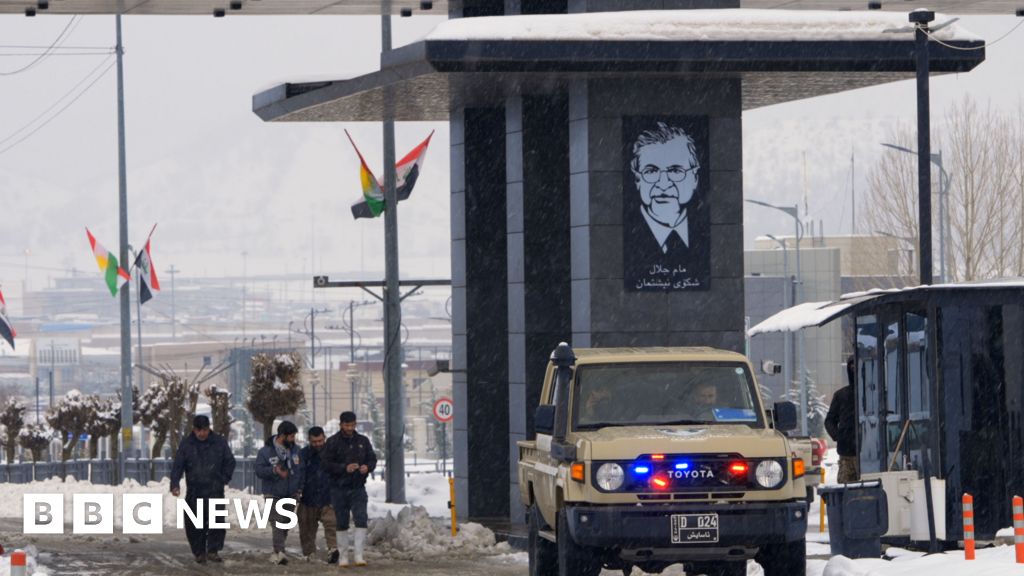
The BBC speaks to Iranians at the border with Iraq, as authorities continue to block the flow of information with an internet blackout.
Watch LiveBritish Broadcasting CorporationHomeNewsSportBusinessInnovationHealthCultureArtsTravelEarthAudioVideoLiveDocumentariesHomeNewsIsrael-Gaza WarWar in UkraineUS & CanadaUKUK PoliticsEnglandN. IrelandN. Ireland PoliticsScotlandScotland PoliticsWalesWales PoliticsAfricaAsiaChinaIndiaAustraliaEuropeLatin AmericaMiddle EastIn PicturesBBC InDepthBBC VerifySportBusinessExecutive LoungeTechnology of BusinessFuture of BusinessInnovationWatch DocumentariesTechnologyScienceArtificial IntelligenceAI v the MindHealthWatch DocumentariesCultureWatch DocumentariesFilm & TVMusicArt & DesignStyleBooksEntertainment NewsArtsWatch DocumentariesArts in MotionTravelWatch DocumentariesDestinationsAfricaAntarcticaAsiaAustralia and PacificCaribbean & BermudaCentral AmericaEuropeMiddle EastNorth AmericaSouth AmericaWorld’s TableCulture & ExperiencesAdventuresThe SpeciaListEarthWatch DocumentariesNatural WondersWeather & ScienceClimate SolutionsSustainable BusinessGreen LivingAudioPodcast CategoriesRadioAudio FAQsVideoWatch DocumentariesBBC MaestroDiscover the WorldLiveLive NewsLive SportDocumentariesHomeNewsSportBusinessInnovationHealthCultureArtsTravelEarthAudioVideoLiveDocumentariesWeatherNewslettersWatch Live'I was hit in the face by pellets': Iranians on border describe violence and more protests24 hours agoShareSaveLucy WilliamsonBashmaq border crossing, Iraqi KurdistanShareSaveFred Scott/BBCPeople and traffic still regularly cross the Iran-Iraq borderAt the border crossing from Iran into Iraqi Kurdistan, the stern face of Iran's former supreme leader, Ayatollah Khomeini, peers down at the trickle of Iranians leaving the territory.
Thick snowflakes confetti the lorries and pedestrians arriving at this remote mountain pass.
Metres away, just beyond the border post, an Iranian flag flutters in the snow.
Iran has shut down the internet and blocked phone calls into the country, but its borders are still open.
Inside the arrivals hall, we find dozens of men, women and children – many arriving to visit family on the Iraqi side of the border.
No-one we met said they were fleeing Iran because of the recent protests and government crackdown, but one man – who asked us to hide his identity – told us security forces had shot him during a protest in central Iran last Friday.
"I was hit in the face by seven pellet rounds," he said, pointing out several weals and bruises on his face. "They struck above my eyelid, on my forehead, my cheek, my lip, under my ear and along my jaw. I had to use a razor blade to cut one of the pellets out."
He told us he was too afraid of being arrested to get medical help, and that others injured during the government crackdown on protestors were also avoiding treatment, out of fear that security forces would arrive and arrest them.
"One of my friends told me he was hit by a pellet round," he told us. "His son, who is around 12 or 13 years old, was struck twice in the leg by live ammunition. One of the bullets is lodged in the shin bone. They're terrified of going to hospital to have it removed."
Iran's regime has treated these protests as an existential threat. Its crackdown seems to be working, and protesters are now thought to be largely staying at home, for fear of being shot or arrested. Rights groups say at least around 2,500 people have been killed.
But several people here told us that demonstrations had continued, at least into


0 Comments