
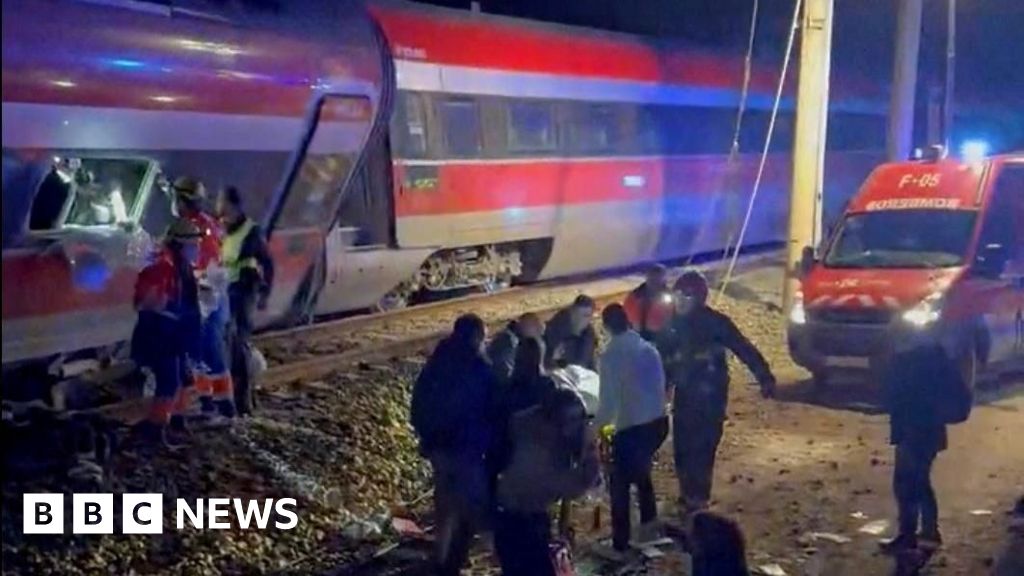
More than 400 passengers were on board the trains that derailed near the city of Córdoba in Spain's worst rail crash in more than a decade.
Watch LiveBritish Broadcasting CorporationHomeNewsSportBusinessInnovationHealthCultureArtsTravelEarthAudioVideoLiveDocumentariesHomeNewsIsrael-Gaza WarWar in UkraineUS & CanadaUKUK PoliticsEnglandN. IrelandN. Ireland PoliticsScotlandScotland PoliticsWalesWales PoliticsAfricaAsiaChinaIndiaAustraliaEuropeLatin AmericaMiddle EastIn PicturesBBC InDepthBBC VerifySportBusinessExecutive LoungeTechnology of BusinessFuture of BusinessInnovationWatch DocumentariesTechnologyScienceArtificial IntelligenceAI v the MindHealthWatch DocumentariesCultureWatch DocumentariesFilm & TVMusicArt & DesignStyleBooksEntertainment NewsArtsWatch DocumentariesArts in MotionTravelWatch DocumentariesDestinationsAfricaAntarcticaAsiaAustralia and PacificCaribbean & BermudaCentral AmericaEuropeMiddle EastNorth AmericaSouth AmericaWorld’s TableCulture & ExperiencesAdventuresThe SpeciaListEarthWatch DocumentariesNatural WondersWeather & ScienceClimate SolutionsSustainable BusinessGreen LivingAudioPodcast CategoriesRadioAudio FAQsVideoWatch DocumentariesBBC MaestroDiscover the WorldLiveLive NewsLive SportDocumentariesHomeNewsSportBusinessInnovationHealthCultureArtsTravelEarthAudioVideoLiveDocumentariesWeatherNewslettersWatch LiveHigh-speed train collision in Spain kills at least 21Just nowShareSaveRachel Hagan,BBC News,Harry Sekulich,BBC NewsandGuy Hedgecoe,MadridShareSaveFootage shows emergency workers at scene of derailmentAt least 21 people have died in a train collision in southern Spain and left dozens more injured, as authorities warned the death toll could increase in Spain's worst rail collision in more than a decade.
Carriages on a Madrid-bound train derailed and crossed over to the opposite tracks, colliding with an oncoming train in Adamuz, near the city of Córdoba.
Four hundred passengers and staff were onboard both trains, the rail networks said. At least 24 people were seriously injured in the collision, including four children, according to Andalusia's emergency services.
Spanish Transport Minister Óscar Puente described the incident as "extremely strange" as officials launched an investigation.
All the railway experts consulted by the government "are extremely baffled by the accident", Puente told reporters in Madrid.
Rail network operator Adif said the collision happened about ten minutes after the train left Malaga at 18:40 local time (17:40 GMT) heading to Madrid, after derailing on a straight stretch of track.
The force of the crash pushed the carriages of the second train into an embankment, Puente said, adding that most of those killed and injured were in the front carriages of the second train.
The type of train involved in the crash was a Freccia 1000, which can reach top speeds of 400 km/h (250 mph), a spokesperson for the Italian rail company Ferrovie dello Stato told the Reuters news agency.
Rescue teams said the twisted wreckage of the trains made it difficult to recover people trapped inside the carriages.
Córdoba fire chief Francisco Carmona told Spanish public broadcaster RTVE: "We have even had to remove a dead person to be able to reach someone alive. It is hard, tricky work."
Salvador Jimenez, a journalist with RTVE who was on one of the trains, said the impact felt like an "earthquake".
"I was in the first carriage. There was a moment when it felt like an earthquake and the train had indeed derailed," Jimenez said.
Footage from the scene appear


0 Comments