
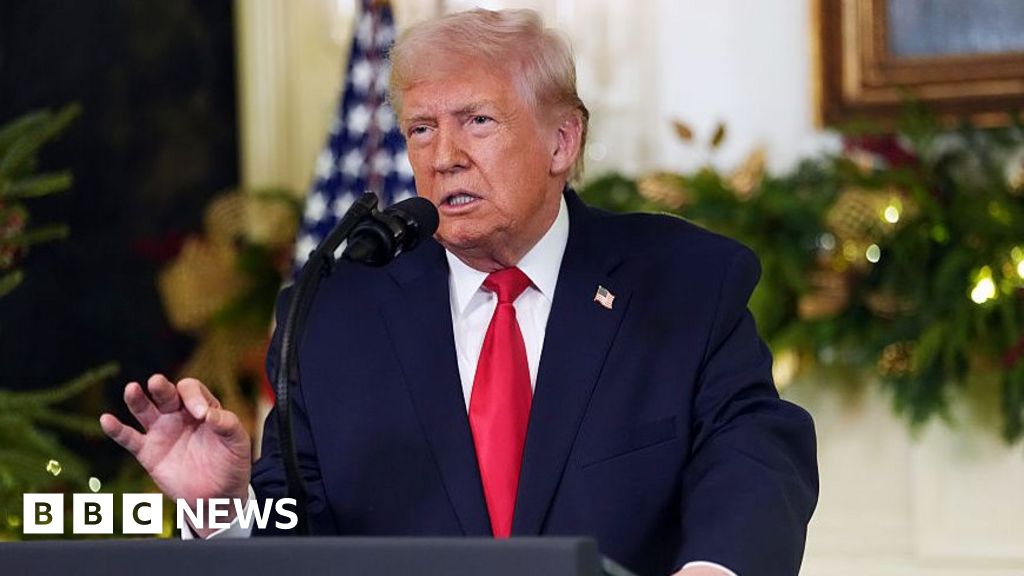
President Donald Trump has unveiled what he calls a “warrior dividend”, announcing direct cash payments to US service members in a nationally televised address aimed at defending his economic performance nearly a year into his return to office. Speaking on Wednesday night, Trump said 1.45 million active-duty service members would each receive $1,776, with cheques already being processed and expected to arrive before Christmas.
The total cost of the initiative is estimated at $2.57 billion, which Trump said would be funded partly through revenue generated from his administration’s sweeping tariffs, as well as from the recently passed “One Big, Beautiful Bill”, signed into law on 4 July. According to the president, the payment is symbolic, designed to honour the United States’ founding year of 1776, and meant to recognize the sacrifices of the military. “Nobody deserves it more than our military,” he said.
The 18-minute address was delivered in Trump’s trademark combative style. Alongside the military payment, he strongly defended his economic record, repeatedly blaming former President Joe Biden and Democrats for rising prices. Trump claimed that under his leadership, prices were now “coming down fast,” pointing to declines in fuel and egg prices as evidence that his policies were working.
However, economic data paints a more mixed picture. While some prices have eased, many everyday costs remain high. Inflation stood at 3% in September, the highest level since January, and consumer confidence has dropped to its lowest point since April, largely due to concerns over housing, healthcare, childcare, and job security. Polls consistently show that the cost of living remains a major pain point for Americans.
Democrats were quick to criticize the speech. Senate Minority Leader Chuck Schumer said Trump appeared disconnected from everyday realities, arguing that many Americans feel more financially squeezed than ever. “Tonight Donald Trump took a victory lap,” Schumer said, despite widespread economic anxiety.
Polling underscores the challenge facing the administration. A Politico survey found that about half of voters, including four in ten Trump voters, believe the cost of living is the worst it has been in their lifetime. Another poll by CBS News/YouGov showed Trump’s approval rating on economic issues dropping sharply since March, with just 36% approving of his handling of the economy.
Despite acknowledging that economic concerns hurt Republicans in recent elections and that incumbents often struggle ahead of midterms, Trump offered little direct empathy in his address. Instead, he highlighted Republican tax reforms and promised that Americans would feel the benefits more clearly in the coming year.
The president closed by looking ahead to the 250th anniversary of America’s independence in 2026, framing it as a moment when the nation would reclaim global respect and confidence. Whether the “warrior dividend” and optimistic messaging will shift public sentiment remains uncertain, especially as many Americans say they are still waiting to see tangible improvements in their daily lives.


0 Comments