
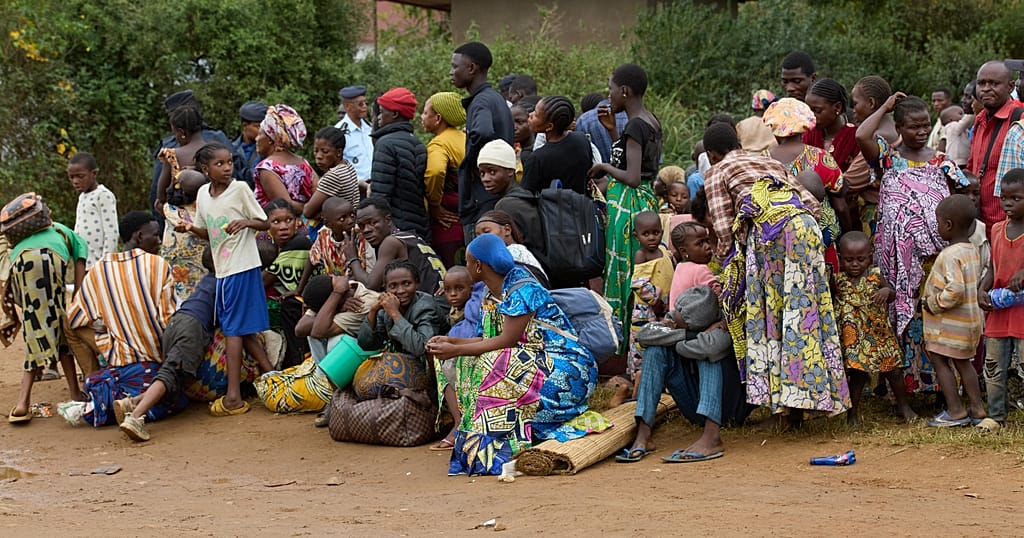
A fresh wave of violence in eastern Democratic Republic of Congo has forced thousands of civilians to flee across the border into neighbouring Burundi, as fighting involving the Rwanda-backed M23 rebel group intensifies in South Kivu province. What’s unfolding is not just another border crossing — it’s a full-blown humanitarian breakdown playing out in real time.
Regional officials say more than 400 civilians have been killed since M23 escalated its offensive, pushing terrified families to abandon their homes with nothing but the clothes on their backs. At makeshift refugee sites like Kansega camp in western Burundi, conditions are grim. Refugees report no access to clean water, no toilets, and no proper shelter, leaving already-traumatized people exposed to disease, hunger, and the elements.
Many of those who escaped described journeys marked by fear, exhaustion, and loss. Entire livelihoods were wiped out overnight. Speaking to journalists, Congolese refugee Nayonde Mbilize made a desperate plea, calling on Rwanda’s President Paul Kagame to show compassion and allow displaced people to return home safely if conditions improve. Her words echo a broader cry from refugees who feel forgotten by global power players.
The numbers tell a brutal story. More than 200,000 people have been displaced across South Kivu since December 2, according to local U.N. partners, with over 70 additional deaths recorded in the same period. Humanitarian agencies are scrambling to respond, and the U.N. refugee agency is preparing to open additional camps to cope with the growing influx.
Adding to the alarm is the spillover risk. Reports indicate that artillery shells have landed in Rugombo, a town on the Burundian side of the border, suggesting the conflict may be inching closer to becoming a regional crisis rather than a contained internal one. Civilians — both refugees and local Burundians — are now living within range of potential cross-border fire.
This renewed violence comes at an awkward and troubling time. Just last week, the presidents of Congo and Rwanda signed a U.S.-mediated peace agreement in Washington, aimed at reducing hostilities. However, the deal did not include the M23 rebel group, which is holding separate talks and had previously agreed to a ceasefire that both sides now accuse each other of violating. While the agreement commits Rwanda to halt support for armed groups, enforcement remains uncertain on the ground.
Eastern Congo remains a powder keg. More than 100 armed groups are competing for control of the region’s vast mineral wealth, with M23 standing out as the most powerful and destabilizing. The result is one of the largest humanitarian crises on the planet, with over 7 million people displaced nationwide, according to the U.N. refugee agency.
Bottom line? This isn’t just a security issue — it’s a human tragedy fueled by geopolitics, minerals, and broken peace promises. Until armed groups are truly restrained and civilians are put first, the exodus will continue, borders will strain, and the suffering will only deepen.


0 Comments