
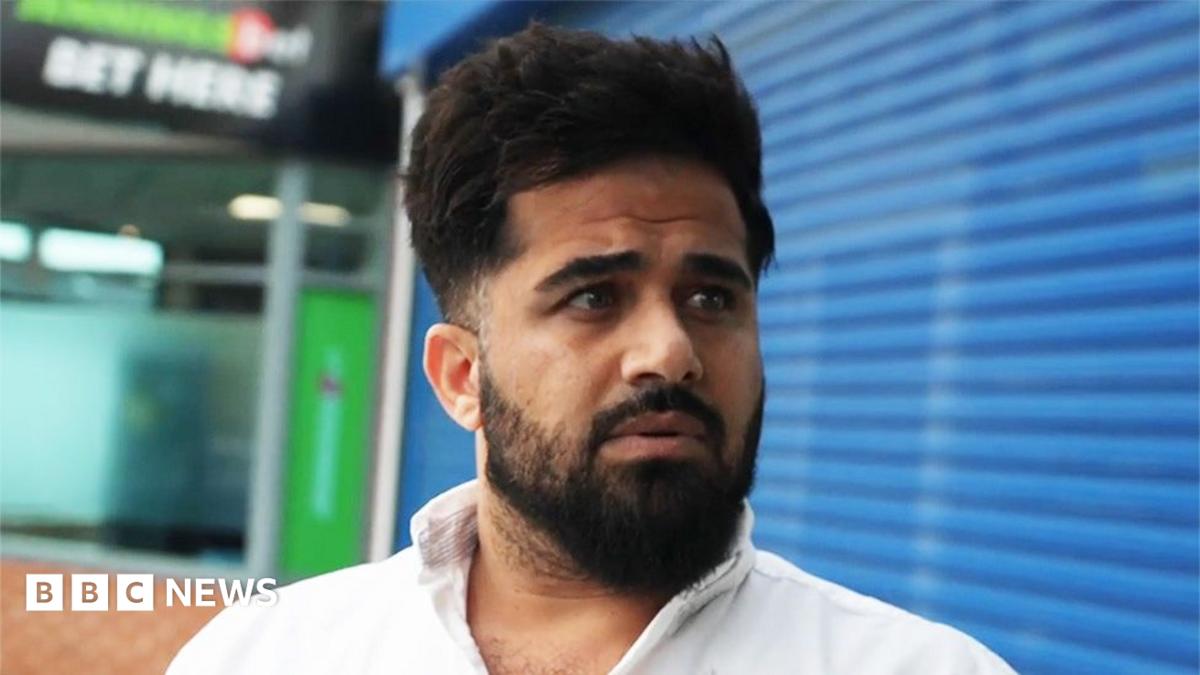
BBC HomepageSkip to contentAccessibility HelpYour accountHomeNewsSportEarthReelWorklifeTravelCultureFutureMusicTVWeatherSoundsMore menuMore menuSearch BBCHomeNewsSportEarthReelWorklifeTravelCultureFutureMusicTVWeatherSoundsClose menuBBC NewsMenuHomeClimateWorldUS & CanadaUKBusinessTechScienceEntertainment & ArtsHealthMoreIn PicturesBBC VerifyNewsbeatUKEnglandN. IrelandScotlandWalesIsle of ManGuernseyJerseyLocal NewsPeople smuggler convicted in France found by BBC living in UK and seeking asylumTo play this video you need to enable JavaScript in your browser.This video can not be played "I never, I never": Watch Twana Jamal's reaction when BBC confronts him about people smuggling A convicted people smuggler, once described as "the godfather" of the French migrant camps, is living in Leicestershire and believed to be seeking asylum while working illegally, a BBC investigation can reveal. Twana Jamal was given a five-year jail sentence in France in 2016, where authorities described him as one of the most successful people smugglers ever caught. Prosecutors said the Iraqi Kurd, aged 36 at the time, had earned up to £100,000 a week for moving illegal immigrants across the Channel. Following a tip-off this year, we traced Jamal to the village of Blaby and witnessed him working, driving a car without a licence and apparently using a false name. Jamal's presence in the UK raises serious concerns about whether existing border controls are effective in checking asylum seekers who have committed serious crimes overseas. Immigration officers have told the BBC that since the UK left the European Union, it has become more difficult to check criminal records from some other countries. We have found more than 20 active smugglers who have reached the UK - some with overseas convictions, and some claiming asylum using false names. Our exposure of Jamal came about as part of a BBC investigation which led to the arrest of a leading people smuggler, Kardo Jaf. That story is told in the BBC Radio 4 podcast, To Catch A King. Listen on SoundsWe received a tip-off that Jamal, another major figure in the trade, was now living and working in the UK. He was described as driving a BMW and looking "very very rich". Like Jaf, Jamal was linked to the so-called Ranya Boys, one of a small number of Kurdish gangs who European law enforcement agencies say have come to dominate cross-channel people smuggling over the past 15 years. Jamal's trial in France gave us key details about his background. Prosecutors said that from about 2012 until 2016, he had been operating out of the Grand Synthe camp near Dunkirk, charging his customers £4,500-£5,000 to cross to the UK. At that time, the mode of travel preferred by cross-channel smugglers was freight lorries rather than small boats. The court also heard that Jamal's nickname in the camps had been "Pasha" - a Turkish word meaning someone of high rank. Jamal claimed in the French court that his had been a case of mistaken identity, but he was found guilty and told he faced deportation back to Iraqi Kurdistan after his release. Image source, Getty ImagesImage caption, 2016: Grande Synthe camp in northern France, where Jamal ran his people smuggling operation Despite having served time in a French jail, however, he entered the UK and, when confronted, told us he had applied for asylum and was "still waiting". There are several legal barriers to criminals claiming asylum in the UK. The law says anyone who has spent 12 months or more in prison overseas should face a mandatory refusal. However, it could be that Jamal's criminal record was not checked, or that he used a false name. When he was tried in France, the court heard that, as well as "Pasha", he used several aliases - so many, prosecutors said, that he would write his assumed name inside his baseball cap to remember who he was supposed to be. We narrowed the search for Jamal with several sources - one of them arranged a call with Jamal under a false pretext and recorded their conversation. Jamal said he was now based in Leicester, and boasted: "We know everyone in this city, this city is ours." He was making "good money", he continued, and told our contact there was work to be had "moving cigarettes" from a warehouse. Jamal also admitted driving a car without a licence, but said he was not worried about being investigated or caught. "No-one touches us here," he said. "Even the police won't stop you." From this information, we searched for companies in the Leicester area that might be linked to Jamal, and found two mini-marts in Blaby - a village of about 6,000 people on the outskirts of the city. The mini-marts, both named Candy Corner, are metres away from each other on opposite sides of the high street (by chance, one of them also stands next door to the constituency office of the local Conservative MP). Over several days last month, we watched comings and goings at the brightly coloured stores, which sell vapes and sweets until late in the evening. We had a photo from Jamal's 2016 court appearance in France, which showed him flanked by police and wearing a weightlifter's vest. Image caption, 2016: Twana Jamal in a French courtroom, where he received a five-year sentence Before long, we saw someone who looked identical, now dressed very smartly in jeans and what appeared to be a cashmere coat. To confirm it was Jamal, we made an undercover visit to one of the shops where he was staffing the till, and started a conversation. He introduced himself as "Sultan", and we noticed he had a tattoo on the back of one hand, which matched one seen on Jamal's social media (where he calls himself Sultan Pasha). If he was claiming asylum he should have been neither working nor driving, but we watched him doing both over several days.
Original Source: BBC


0 Comments