
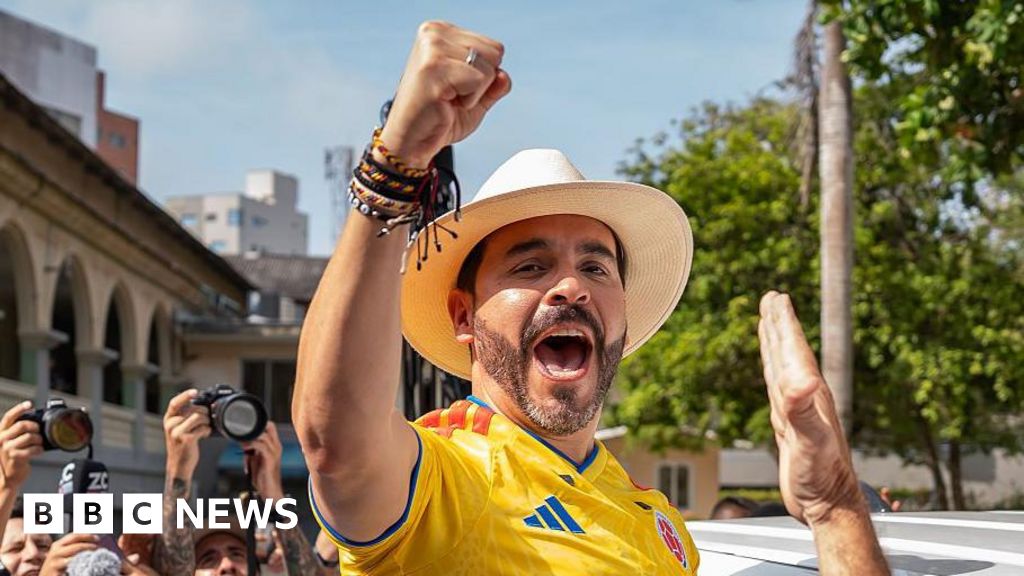
Miguel De la Espriella has emerged victorious in Colombia’s presidential runoff election after one of the closest contests in the country’s recent history.
With more than 99% of votes counted, De la Espriella secured nearly 49.7% of the vote, narrowly defeating left-wing candidate Iván Cepeda, who received about 48.7%. The result marks a major political shift in Colombia and signals a possible change in the country’s approach to security and governance.
Following the announcement of the preliminary results, De la Espriella addressed supporters in the coastal city of Barranquilla, declaring the beginning of a new era for Colombia. He promised to govern for all citizens, including those who did not vote for him, and pledged to uphold the country's constitution.
The election victory was celebrated by thousands of supporters who gathered in the streets waving Colombian flags, wearing the national football jersey, and chanting slogans in support of the president-elect. Some supporters also wore hats inspired by the campaign slogan "Make Colombia Great Again."
However, the result remains controversial. Iván Cepeda has not officially conceded defeat, arguing that the preliminary count is not yet legally binding. He stated that his campaign would wait for the final verification process before recognizing the official outcome.
Current President Gustavo Petro has also questioned the preliminary result, calling for an audit of the voting software and raising concerns about the integrity of some polling stations, although no evidence has been publicly presented to support those claims.
De la Espriella, a lawyer and businessman with no previous political experience, campaigned on promises to tackle crime, drug trafficking, and armed groups through stronger military action. He has criticized the government's current peace strategy, arguing that negotiations with illegal armed organizations have failed to reduce violence.
The president-elect has pledged to end talks with armed groups and instead pursue a tougher security policy. His proposals include expanding cooperation with the United States, building large prisons, reforming the healthcare system, and reducing government bureaucracy.
His victory comes at a time when Colombia faces growing security challenges. Armed groups, including guerrilla factions and criminal organizations, have expanded their influence in recent years, contributing to rising violence and record levels of cocaine production.
While supporters view De la Espriella as a leader capable of restoring order and creating economic opportunities, critics fear his hardline approach could deepen political divisions in a country already facing significant polarization.
As Colombia prepares for a new administration, attention now turns to the final certification of the election results and the challenges awaiting the country's next president.


0 Comments