
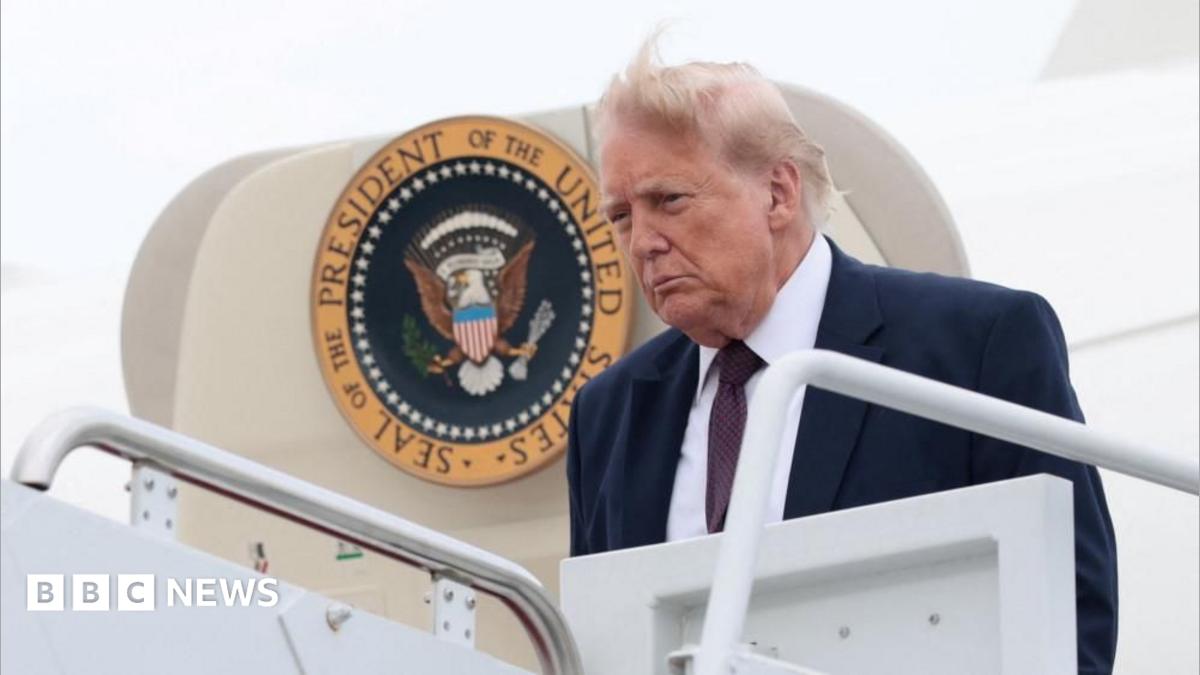
BBC HomepageSkip to contentAccessibility HelpYour accountHomeNewsSportEarthReelWorklifeTravelCultureFutureMusicTVWeatherSoundsMore menuMore menuSearch BBCHomeNewsSportEarthReelWorklifeTravelCultureFutureMusicTVWeatherSoundsClose menuBBC NewsMenuHomeClimateWorldUS & CanadaUKBusinessTechScienceEntertainment & ArtsHealthMoreIn PicturesBBC VerifyNewsbeatUS & CanadaCongress passes war powers measure for first time, rebuking Trump's war with IranImage source, AFP via Getty ImagesBySareen HabeshianPublished23 June 2026Updated 3 hours agoThe Republican-controlled US Senate has approved a measure instructing President Donald Trump to halt the war in Iran or seek congressional approval before continuing military action. A handful of Republicans joined Democrats in Tuesday's 50-48 vote. The same measure was passed by the US House of Representatives earlier this month. But the resolution is largely symbolic because, even after passing both chambers of Congress, it will not be sent to Trump for his consideration and does not carry the force of the law. It came as Republicans in Congress have expressed scepticism about a peace plan Trump agreed with Iran, and the unpopular conflict approaches its fifth month. UN says it will evacuate sailors stranded in Strait of Hormuz, as Rubio warns against tolls Published9 hours agoTrump criticised the resolution on Tuesday night, calling it "poorly timed and meaningless". "So, I have Iran on the 'ropes,' ready to go down for the fall... and the U.S. Senate decides to have a poorly timed and meaningless War Powers Act Vote," Trump wrote on his Truth Social platform. "These Senators have just made my job more difficult, but I will get it done, one way or the other, because I always get it done!" The vote marks the first time that both chambers of Congress have approved a concurrent resolution instructing a president to end a military action since the War Powers Resolution of 1973 was enacted. A concurrent resolution expresses the sentiment or will of Congress, as opposed to other forms of legislation that go to the president to be signed into law. In 2019, Trump vetoed a joint resolution that called for the removal of armed forces from hostilities in the Yemeni civil war. Middle East analyst Laura Blumenfeld called it "more of a slap on a wrist than a handcuff, because it has no legal binding". But she told the BBC she thought what "it does reflect is the American people's sentiments". The concurrent resolution's passage is significant because it adds to pressure on the White House to find an end to the Iran war, which is unpopular with the public after petrol prices spiked. The same measure was passed earlier this month by the US House of Representatives, where four Republicans joined every Democrat to approve it in a 215-208 vote. But a White House official told the BBC that with the ceasefire agreed on 7 April, there are no hostilities from which to withdraw American forces. The official also said the measure only passed because two Republican senators were absent: Mitch McConnell and Dave McCormick. Four Republican senators voted with Democrats in support of the resolution: Rand Paul, Lisa Murkowski, Susan Collins and Bill Cassidy. Democratic Senator John Fetterman was the only member of his party to vote against it. It was the latest sign of division among Trump's fellow Republicans ahead of the midterm elections in November, which will determine whether the party can hold on to its slender majorities in both chambers of Congress. Some Republicans have resisted the president recently, including by rejecting his plans to create a $1.8 bn (£1.3bn) "anti-weaponisation" fund and approving Ukraine aid. Tuesday's vote was the 10th time that Senate Democrats have forced a war powers vote since the start of the war. It came the same day as the Pentagon asked Congress for some $80bn, most of which is to pay for the war with Iran. Federal law requires congressional approval to continue military actions for more than 60 days. The US-Israel strikes on Iran began on 28 February, although the Trump administration has argued April's ceasefire reset the clock. The White House can also extend the deadline for another 30 days, citing national security. Currently, the US and Iran have agreed to continue a ceasefire and are working towards an end of hostilities under a memorandum of understanding that was signed by the presidents of both countries last week. Under that memo, Washington and Tehran have 60 days to negotiate a broader agreement on ending Iran's nuclear programme. Dozens of ships head through Strait of Hormuz after US-Iran deal Iran says no new commitments on nuclear sites after Vance says inspectors to be invited back US House delivers rebuke to Trump as it votes to halt Iran war The video playlistWatch our pick of standout clips from across the BBC PreviousNext1:05Why is the UK not built for extreme heat? 00:01:05, play videoWhy is the UK not built for extreme heat?1:00'Everything I've done is because somebody said I couldn't' 00:01:00, play video'Everything I've done is because somebody said I couldn't'0:37Sophie’s Med veg and tuna potato salad. 00:00:37, play videoSophie’s Med veg and tuna potato salad1:18The Irish priest who built an airport. 00:01:18, play videoThe Irish priest who built an airport1:28Is vaginal microbiome testing worth it? 00:01:28, play videoIs vaginal microbiome testing worth it?1:25Farage quizzed over £5m gift from billionaire donor. 00:01:25, play videoFarage quizzed over £5m gift from billionaire donor0:47Ex-SNP chief jailed for £400,000 embezzlement. 00:00:47, play videoEx-SNP chief jailed for £400,000 embezzlement0:59How to keep children cool in the heat. 00:00:59, play videoHow to keep children cool in the heat1:02New diabetes drug available on NHS. 00:01:02, play videoNew diabetes drug available on NHS0:39Why do World Cup stadiums cover up branding? 00:00:39, play videoWhy do World Cup stadiums cover up branding?0:55Are UK prime ministers spending less time in the job? 00:00:55, play videoAre UK prime ministers spending less time in the job?1:08What does Trump want from the next UK PM? 00:01:08, play videoWhat does Trump want from the next UK PM?1:08What was JD Vance trying to achieve in Switzerland? 00:01:08, play videoWhat was JD Vance trying to achieve in Switzerland?1:31Do people have faith in prime ministers? 00:01:31, play videoDo people have faith in prime ministers?1:01What do we know about Burnham's politics? 00:01:01, play videoWhat do we know about Burnham's politics?0:51How Tom Hanks was sold on voicing Woody. 00:00:51, play videoHow Tom Hanks was sold on voicing WoodyTop storiesLive. Senior minister Darren Jones says he won't challenge Andy Burnham for Labour leadership The UK's summers are getting hotter - but how prepared are we? Ten years on, Brexit's economic impact is becoming clearer Stanford was their golden ticket - could AI help or hinder that? How Washington DC's Reflecting Pool became a global talking point. VideoHow Washington DC's Reflecting Pool became a global talking point
Original Source: BBC


0 Comments