
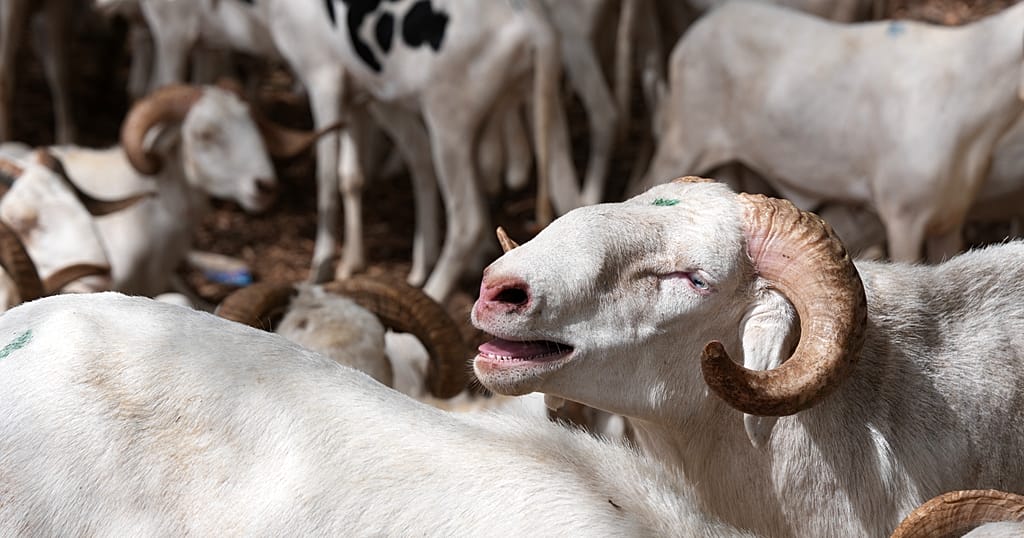
Burkina Faso has suspended the export of all livestock until further notice in a move aimed at increasing domestic meat supply and stabilizing local prices. The government says the policy is designed to ensure more animals remain within the country to support local consumption and reduce pressure on meat costs.
The decision has received mixed reactions across the country. While some consumers have welcomed the move, hoping it will lead to cheaper meat, livestock traders and exporters say it is severely affecting their income and disrupting long-standing trade routes with neighboring countries such as Ghana and Côte d’Ivoire.
One livestock trader, Moussa Sangaré, explained the impact on his business, noting that exports have completely stopped this year. He said prices in the local market have dropped sharply due to oversupply. “A sheep that we buy in the bush for 100,000 CFA francs, we’re forced to sell for 50,000 CFA francs,” he said, describing the situation as unsustainable for traders.
Another exporter, Abassé Kabré, who has been in the livestock trade for nearly a decade, said the suspension has hit his operations hard, especially since his Djallonke sheep are highly valued in Ghana. He expressed hope that the restriction would be lifted after the upcoming Tabaski festival, allowing trade to resume and businesses to recover.
On the consumer side, residents in the capital Ouagadougou have expressed cautious optimism. André Tiendrébéogo, a local resident, said the policy could bring relief if it reduces meat prices. “We hope that the price per kilogramme of meat will fall as a result of this suspension. It will be a real relief for consumers,” he said.
According to officials, meat prices in recent months have fluctuated between 3,000 and 5,000 CFA francs per kilogram. The government’s broader strategy is to gradually shift from exporting live animals to promoting processed meat exports, which they believe will add more value to the economy.
In 2024, livestock including cattle, sheep, and goats ranked as Burkina Faso’s third-largest export category after gold and cotton, generating approximately 11.8 billion CFA francs in revenue.
While the policy may ease short-term pressure on local meat prices, analysts say its long-term success will depend on how well the government supports traders and transitions the livestock sector toward value-added exports.


0 Comments