
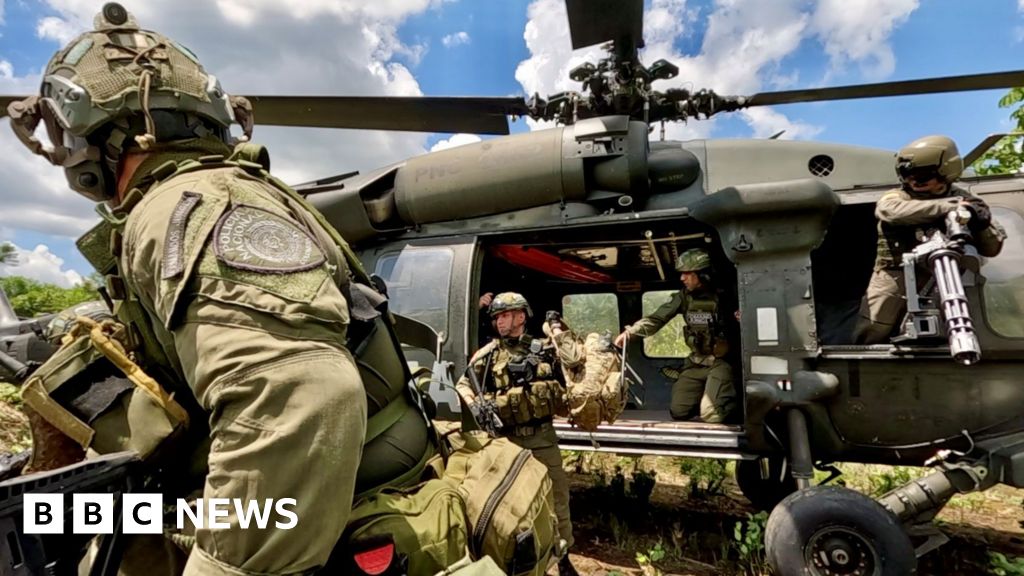
As the US and Colombian presidents meet, Orla Guerin joins a police unit tasked with finding and destroying jungle cocaine labs.
Watch LiveBritish Broadcasting CorporationHomeNewsSportBusinessTechnologyHealthCultureArtsTravelEarthAudioVideoLiveDocumentariesHomeNewsUS & CanadaUKUK PoliticsEnglandN. IrelandN. Ireland PoliticsScotlandScotland PoliticsWalesWales PoliticsAfricaAsiaChinaIndiaAustraliaEuropeLatin AmericaMiddle EastIn PicturesBBC InDepthBBC VerifySportBusinessWorld of BusinessTechnology of BusinessNYSE Opening BellTechnologyWatch DocumentariesArtificial IntelligenceAI v the MindHealthWatch DocumentariesCultureWatch DocumentariesFilm & TVMusicArt & DesignStyleBooksEntertainment NewsArtsWatch DocumentariesArts in MotionTravelWatch DocumentariesDestinationsAfricaAntarcticaAsiaAustralia and PacificCaribbean & BermudaCentral AmericaEuropeMiddle EastNorth AmericaSouth AmericaWorld’s TableCulture & ExperiencesAdventuresThe SpeciaListEarthWatch DocumentariesScienceNatural WondersClimate SolutionsSustainable BusinessGreen LivingAudioPodcast CategoriesRadioAudio FAQsVideoWatch DocumentariesBBC MaestroDiscover the WorldLiveLive NewsLive SportDocumentariesHomeNewsSportBusinessTechnologyHealthCultureArtsTravelEarthAudioVideoLiveDocumentariesWeatherNewslettersWatch LiveBBC joins Colombian commandos fighting 'never-ending battle' against drug gangs25 minutes agoShareSaveOrla GuerinSenior International Correspondent in ColombiaShareSaveWatch: Orla Guerin joins Colombian commandos on a mission to find cocaine labs in the jungleThe Black Hawk helicopter was ready for take off – its rotor blades slicing through the air in the deadening heat of the Colombian Amazon. We ducked low and crammed in alongside the Jungle Commandos – a police special operations unit armed by the Americans and originally trained by Britain's SAS, when it was founded in 1989.
The commandos were heavily armed. The mission was familiar. The weather was clear. But there was tension on board, kicking in with the adrenaline. When you go after any part of the drug trade in Colombia, you have to be ready for trouble.
The commandos often face resistance from criminal groups, and current and former guerrillas who have replaced the cartels of the 1970s and 80s.
We took off, flying over the district of Putumayo - close to the border with Ecuador - part of Colombia's cocaine heartland. The country provides about 70% of the world's supply.
Just ahead two other Black Hawks were leading the way.
Down below us there was dense forest and patches of bright green – the tell-tale sign of coca plant cultivation. The crop now covers an area nearly twice the size of Greater London, and four times the size of New York, according to the latest figures from the United Nations Office on Drugs and Crime (UNODC), published in 2024.
President Donald Trump says Colombia's left-wing President Gustavo Petro is not doing enough to prevent cocaine from his country winding up on America's streets. Last month he called him "a sick man who likes selling cocaine to the United States" and said "he could be next" for US military intervention. But that threat appears to have receded.
President Petro counters that his government has seized the largest amount of drugs in history. But on his watch cocaine production has also soared to record highs, according to the United Nations 'World Drug Report 2025. Petro disputes the UN's method of counting.
The fight against drug production and trafficking from Colombia will be high on the agenda when the two pr


0 Comments