
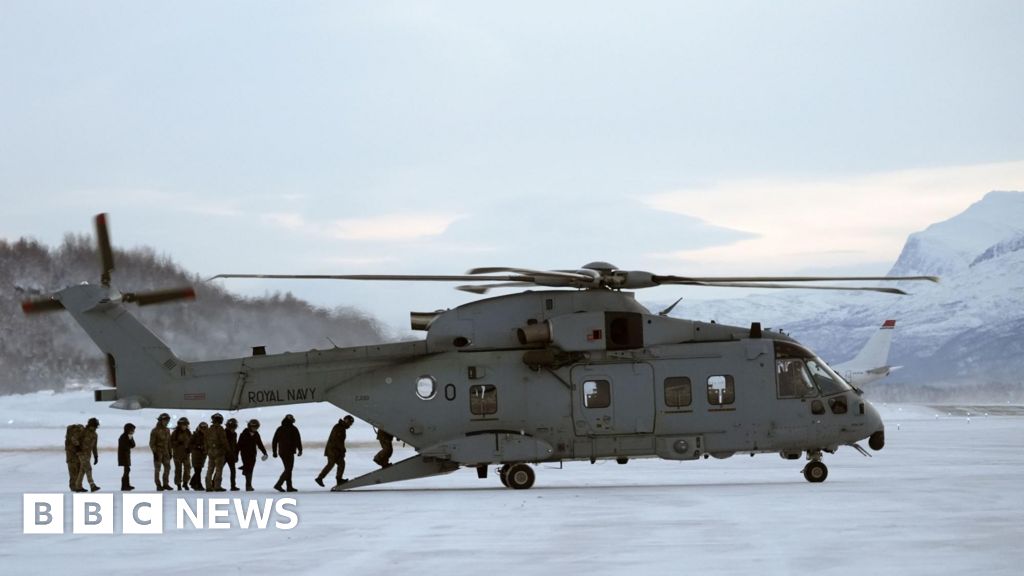
Defence Secretary John Healey says British personnel in Norway will rise from 1,000 to 2,000 over three years.
Watch LiveBritish Broadcasting CorporationHomeNewsSportBusinessTechnologyHealthCultureArtsTravelEarthAudioVideoLiveDocumentariesHomeNewsUS & CanadaUKUK PoliticsEnglandN. IrelandN. Ireland PoliticsScotlandScotland PoliticsWalesWales PoliticsAfricaAsiaChinaIndiaAustraliaEuropeLatin AmericaMiddle EastIn PicturesBBC InDepthBBC VerifySportBusinessWorld of BusinessTechnology of BusinessNYSE Opening BellTechnologyWatch DocumentariesArtificial IntelligenceAI v the MindHealthWatch DocumentariesCultureWatch DocumentariesFilm & TVMusicArt & DesignStyleBooksEntertainment NewsArtsWatch DocumentariesArts in MotionTravelWatch DocumentariesDestinationsAfricaAntarcticaAsiaAustralia and PacificCaribbean & BermudaCentral AmericaEuropeMiddle EastNorth AmericaSouth AmericaWorld’s TableCulture & ExperiencesAdventuresThe SpeciaListEarthWatch DocumentariesScienceNatural WondersClimate SolutionsSustainable BusinessGreen LivingAudioPodcast CategoriesRadioAudio FAQsVideoWatch DocumentariesBBC MaestroDiscover the WorldLiveLive NewsLive SportDocumentariesHomeNewsSportBusinessTechnologyHealthCultureArtsTravelEarthAudioVideoLiveDocumentariesWeatherNewslettersWatch LiveUK doubles troops in Norway to counter Russian 'threat to Arctic'8 hours agoShareSaveJessica RawnsleyShareSavePA MediaForeign Secretary Yvette Cooper boards a helicopter during her visit to Norway to discuss Nato's presence in the ArcticThe number of British troops in Norway will double over the next three years as part of efforts to combat Russian threats in the High North.
Defence Secretary John Healey said the number of armed forces personnel stationed in the Arctic nation would rise from around 1,000 to 2,000.
The commitment follows increasing concern among Nato allies about Russia's activities in the Arctic, including the reopening of old Cold War bases and a growing military presence in the region.
"Demands on defence are rising and Russia poses the greatest threat to Arctic and High North security that we have seen since the Cold War," Healey said.
The defence secretary will join Nato counterparts at the alliance's headquarters in Brussels on Thursday to discuss the proposals.
The Arctic Sentry, proposed by Foreign Secretary Yvette Cooper, aims to bolster surveillance and security in the region - modelled on existing Nato alliances such as the Baltic Sentry and the Eastern Sentry.
As part of the expanded presence, 1,500 Royal Marine Commandos will take part in Nato's Exercise Cold Response in March. The large-scale drill across Norway, Finland and Sweden is designed to train allied forces in extreme Arctic conditions.
In September, the UK-led Joint Expeditionary Force will conduct an exercise known as Lion Protector involving air, land and naval forces from several European nations.
That operation will train armed forces to defend critical infrastructure against attacks and sabotage across Norway, Iceland and the Danish straits.
The UK and its Nato allies have become increasingly concerned about the risk Moscow poses to underwater cables and pipelines, amid heightened tensions following the invasion of Ukraine.
Last year, the UK and Norway signed a defence pact aimed at protecting undersea cables which will see the two nation's navies operate a combined fleet to track Russian submarines.
There has been a 30% rise in Russian submarines in UK waters over the past two years, according to the MoD.
The defence ministry has sa


0 Comments