
🌅 Good Morning! Here is your latest news update.
Steve Rosenberg reports on the economic consequences of Russia's war, and how people are coping.
Watch LiveBritish Broadcasting CorporationHomeNewsSportBusinessTechnologyHealthCultureArtsTravelEarthAudioVideoLiveDocumentariesHomeNewsUS & CanadaUKUK PoliticsEnglandN. IrelandN. Ireland PoliticsScotlandScotland PoliticsWalesWales PoliticsAfricaAsiaChinaIndiaAustraliaEuropeLatin AmericaMiddle EastIn PicturesBBC InDepthBBC VerifySportBusinessWorld of BusinessTechnology of BusinessNYSE Opening BellTechnologyWatch DocumentariesArtificial IntelligenceAI v the MindHealthWatch DocumentariesCultureWatch DocumentariesFilm & TVMusicArt & DesignStyleBooksEntertainment NewsArtsWatch DocumentariesArts in MotionTravelWatch DocumentariesDestinationsAfricaAntarcticaAsiaAustralia and PacificCaribbean & BermudaCentral AmericaEuropeMiddle EastNorth AmericaSouth AmericaWorld’s TableCulture & ExperiencesAdventuresThe SpeciaListEarthWatch DocumentariesScienceNatural WondersClimate SolutionsSustainable BusinessGreen LivingAudioPodcast CategoriesRadioAudio FAQsVideoWatch DocumentariesBBC MaestroDiscover the WorldLiveLive NewsLive SportDocumentariesHomeNewsSportBusinessTechnologyHealthCultureArtsTravelEarthAudioVideoLiveDocumentariesWeatherNewslettersWatch LiveFour years into its full-scale war in Ukraine, Russia is feeling the effects1 hour agoShareSaveSteve RosenbergRussia editor, in LipetskShareSaveBBCPosters offering large sums of money for joining the army are everywhere in RussiaAt first glance, Yelets in winter looks like something from a Russian fairy tale.
From the embankment I spy the golden domes of Orthodox churches and, down below, ice fishermen dotted along the frozen river.
But in this town, 350km (217 miles) south of Moscow, the fairy tale feeling is transient.
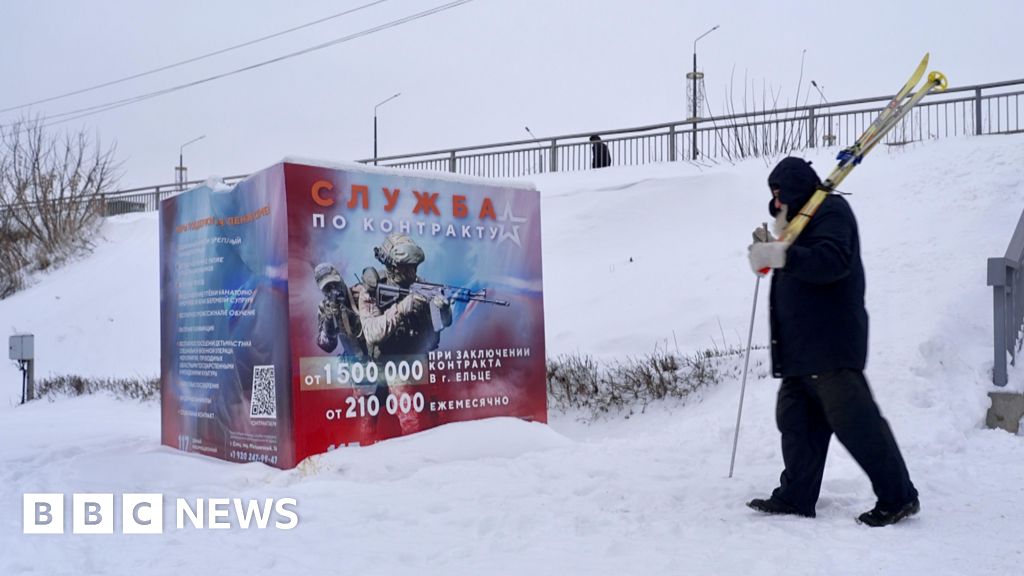
On the riverbank I spot an army recruitment billboard. It promises a one-off sum equivalent to £15,000 to anyone who'll sign up to fight in Ukraine.
Close by there's a poster of a Russian soldier taking aim with a Kalashnikov.
"We're there where we need to be," the accompanying slogan declares.
The Kremlin launched its full-scale invasion of Ukraine on 24 February 2022. Outside Russia it was widely seen as an attempt to force Kyiv back into Moscow's orbit and to overturn the entire post-Cold War security architecture in Europe.
The Russian leadership envisaged a short and successful military operation.
Four years later, Russia's war on Ukraine grinds on. It has lasted longer than Nazi Germany's brutal war on the Soviet Union, known here as the Great Patriotic War.
And, in this town, you can see some of the consequences.
A giant mural fills one side of a nine-storey Yelets apartment block. Depicted here are the faces of five Russian soldiers, local men killed fighting in Ukraine.
"Glory to the heroes of Russia!" has been painted at the top.
The Russian authorities do not release casualty figures for the so-called "special military operation". But Russia is known to have suffered huge battlefield losses. So many of the towns and villages I've visited in the last two years have had museums and monuments dedicated to soldiers killed in Ukraine, as well as separate sections for recent war dead at local cemeteries.
"My friend's husband was killed fighting there. The son of my cousin, too. And grandson," says Irina, who has stopped to chat to me opposite the mural.
"Lots of people have been killed. I feel sorry for these lads."
Irina is a ticket collector at the bus stat


0 Comments