
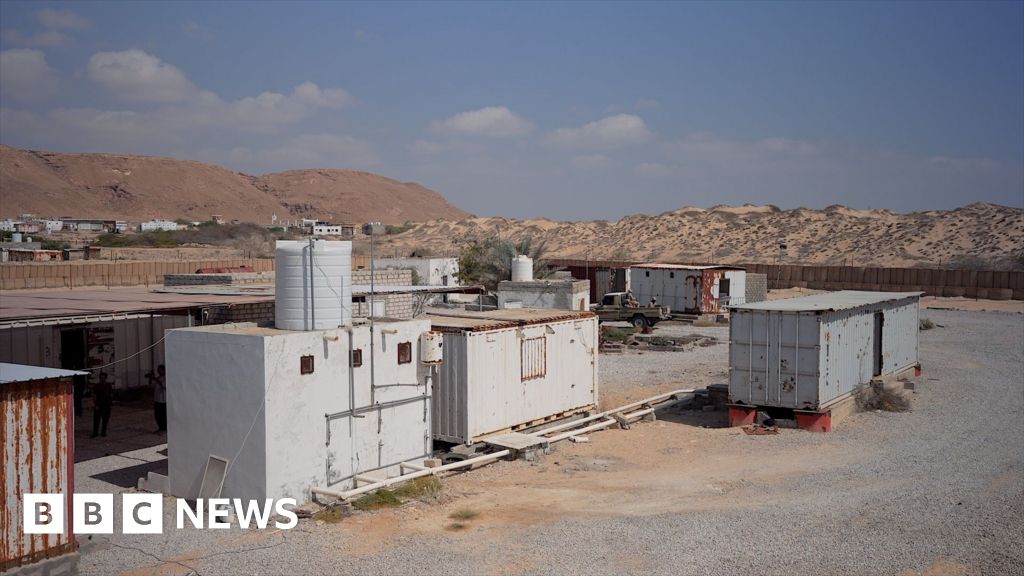
The BBC sees sites on former United Arab Emirates bases in Yemen where detainees say they were abused.
Watch LiveBritish Broadcasting CorporationHomeNewsSportBusinessInnovationHealthCultureArtsTravelEarthAudioVideoLiveDocumentariesHomeNewsIsrael-Gaza WarWar in UkraineUS & CanadaUKUK PoliticsEnglandN. IrelandN. Ireland PoliticsScotlandScotland PoliticsWalesWales PoliticsAfricaAsiaChinaIndiaAustraliaEuropeLatin AmericaMiddle EastIn PicturesBBC InDepthBBC VerifySportBusinessExecutive LoungeTechnology of BusinessFuture of BusinessInnovationWatch DocumentariesTechnologyScienceArtificial IntelligenceAI v the MindHealthWatch DocumentariesCultureWatch DocumentariesFilm & TVMusicArt & DesignStyleBooksEntertainment NewsArtsWatch DocumentariesArts in MotionTravelWatch DocumentariesDestinationsAfricaAntarcticaAsiaAustralia and PacificCaribbean & BermudaCentral AmericaEuropeMiddle EastNorth AmericaSouth AmericaWorld’s TableCulture & ExperiencesAdventuresThe SpeciaListEarthWatch DocumentariesNatural WondersWeather & ScienceClimate SolutionsSustainable BusinessGreen LivingAudioPodcast CategoriesRadioAudio FAQsVideoWatch DocumentariesBBC MaestroDiscover the WorldLiveLive NewsLive SportDocumentariesHomeNewsSportBusinessInnovationHealthCultureArtsTravelEarthAudioVideoLiveDocumentariesWeatherNewslettersWatch Live'I didn't hear from my son for seven months': Inside Yemen's UAE-run secret prisons42 minutes agoShareSaveNawal Al-MaghafiSenior international investigations correspondent, YemenShareSaveLiam weir / BBCOne of the sites had several shipping containers with little ventilation, where detainees said up to 60 men were heldThe BBC has been given access to detention facilities on former United Arab Emirates military bases in Yemen, confirming long-standing allegations of a network of secret prisons run by the UAE and forces allied to it in Yemen's decade-long civil war.
One former detainee told the BBC he had been beaten and sexually abused at one of the sites.
We saw cells at two bases in the south of the country, including shipping containers with names - apparently of detainees - and dates scratched into the sides.
The UAE did not respond to our request for comment, but has previously denied similar allegations.
Until recently, the Yemeni government, which is backed by Saudi Arabia, was allied with the UAE against the Houthi rebel movement which controls north-west Yemen.
But the alliance between Yemen's two Gulf state partners has fractured. UAE forces pulled out of Yemen in early January and Yemeni government forces and groups allied to them have retaken large swathes of the south from separatists backed by the UAE.
This includes the port of Mukalla, where we landed in a Saudi military plane and were taken to visit the former UAE military bases in the Al-Dhaba Oil Export Area.
It has been almost impossible for international journalists to get visas to report from Yemen in recent years, but the government invited reporters to view the two sites, accompanied by Yemen's Information Minister Moammar al-Eryani.
What we saw was consistent with accounts we have gathered independently, both in our previous reporting and also interviews conducted in Yemen, separately from the government-run site visit.
At one site, there were about 10 shipping containers, their interiors painted black, with little ventilation.
Messages on the walls appeared to mark the dates detainees said they were brought in, or to count the number of days they had been held.
At another military base, the BBC was shown ei


0 Comments