
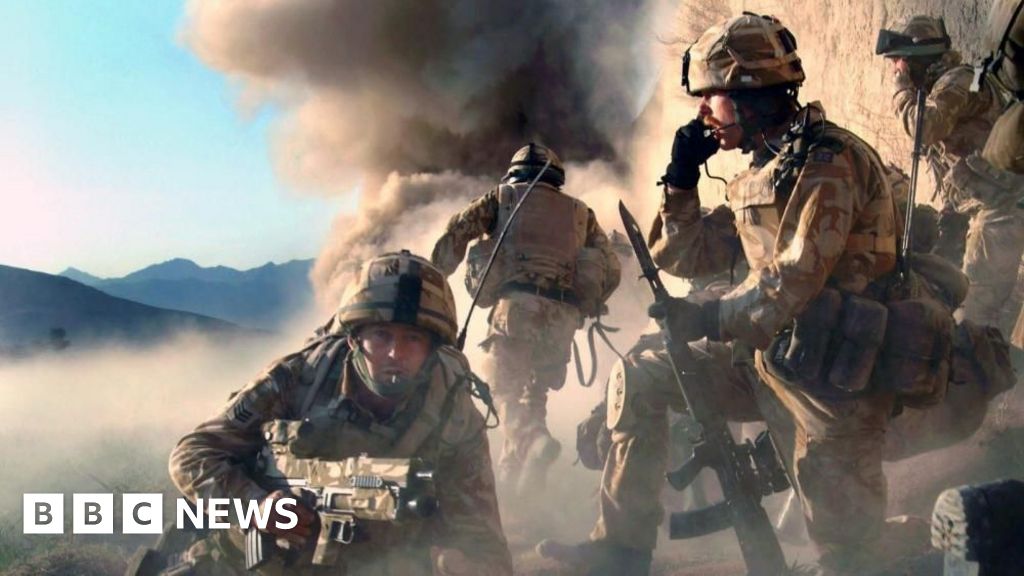
Brits, Canadians and Danes were among those who saw the toughest fighting, writes the BBC's security correspondent.
Watch LiveBritish Broadcasting CorporationHomeNewsSportBusinessInnovationHealthCultureArtsTravelEarthAudioVideoLiveDocumentariesHomeNewsIsrael-Gaza WarWar in UkraineUS & CanadaUKUK PoliticsEnglandN. IrelandN. Ireland PoliticsScotlandScotland PoliticsWalesWales PoliticsAfricaAsiaChinaIndiaAustraliaEuropeLatin AmericaMiddle EastIn PicturesBBC InDepthBBC VerifySportBusinessWorld of BusinessTechnology of BusinessNYSE Opening BellInnovationWatch DocumentariesTechnology (Innovation)ScienceArtificial Intelligence (Innovation)AI v the Mind (Innovation)HealthWatch DocumentariesCultureWatch DocumentariesFilm & TVMusicArt & DesignStyleBooksEntertainment NewsArtsWatch DocumentariesArts in MotionTravelWatch DocumentariesDestinationsAfricaAntarcticaAsiaAustralia and PacificCaribbean & BermudaCentral AmericaEuropeMiddle EastNorth AmericaSouth AmericaWorld’s TableCulture & ExperiencesAdventuresThe SpeciaListEarthWatch DocumentariesNatural WondersWeather & ScienceClimate SolutionsSustainable BusinessGreen LivingAudioPodcast CategoriesRadioAudio FAQsVideoWatch DocumentariesBBC MaestroDiscover the WorldLiveLive NewsLive SportDocumentariesHomeNewsSportBusinessInnovationHealthCultureArtsTravelEarthAudioVideoLiveDocumentariesWeatherNewslettersWatch LiveFrank Gardner: Not only Americans risked life and limb to serve in Afghanistan11 hours agoShareSaveFrank GardnerBBC Security CorrespondentShareSavePA MediaBlast walls, rocket attacks, Forward Operating Bases (FOBs), Improvised Explosive Devices (IEDs)... and long queues in the canteen. Anyone who deployed to Afghanistan, in whatever role, between 2001-2021 will have their own vivid memories of that time.
It started with the flight in – to Kandahar, Kabul or Camp Bastion. It could be a long, slow descent with the lights out on an RAF jet, or a rapid, corkscrew down in a C-130 transport plane. In both cases the aim was to avoid being blown out of the air by a Taliban surface-to-air missile.
Over the course of 20 years thousands of servicemen and women, as well as civilians, from dozens of countries deployed to Afghanistan, answering the US call for assistance.
That call came in the form of invoking Nato's Article 5 of its charter – the only time it has ever happened in Nato's 77-year history – which states that an attack on one member shall be deemed an attack on all.
America was reeling from the devastating 9/11 attacks when al-Qaeda, which was being sheltered by the Taliban in Afghanistan, murdered nearly 3,000 people by flying packed airliners into New York's Twin Towers and the Pentagon in Washington.
The Taliban were swiftly driven from power in a joint effort by the US military, the CIA and Afghanistan's Northern Alliance.
Then it was all about trying to hunt down the remnants of al-Qaeda as Britain's Royal Marines, together with UK Special Forces, pursued them over the mountains but many escaped to safety to regroup in Pakistan.
It was not until ten years later that the US Navy's Seal Team Six commandos tracked down the al-Qaeda leader, Osama Bin Laden, in a villa in Abbottabad, Pakistan.
The first two years of the US-led "Operation Enduring Freedom" as it was called, were relatively quiet. By late 2003, as America's attention switched to Iraq, US servicemen we met even started referring to Afghanistan as "Op Forgotten". But it was still dangerous.
From a rain-soaked Kandahar airbase we watched Romanian troops edge ner


0 Comments