
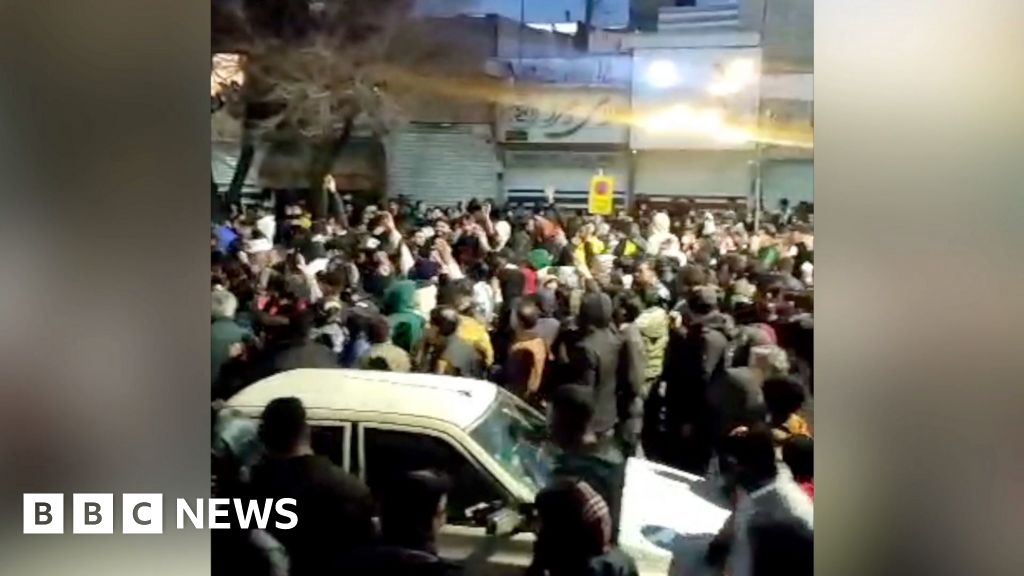
Semi-official Iranian media say two police were killed in a western town, as videos show security forces firing guns and tear gas at crowds elsewhere.
Watch LiveBritish Broadcasting CorporationHomeNewsSportBusinessInnovationHealthCultureArtsTravelEarthAudioVideoLiveDocumentariesHomeNewsIsrael-Gaza WarWar in UkraineUS & CanadaUKUK PoliticsEnglandN. IrelandN. Ireland PoliticsScotlandScotland PoliticsWalesWales PoliticsAfricaAsiaChinaIndiaAustraliaEuropeLatin AmericaMiddle EastIn PicturesBBC InDepthBBC VerifySportBusinessExecutive LoungeTechnology of BusinessFuture of BusinessInnovationWatch DocumentariesTechnologyScienceArtificial IntelligenceAI v the MindHealthWatch DocumentariesCultureWatch DocumentariesFilm & TVMusicArt & DesignStyleBooksEntertainment NewsArtsWatch DocumentariesArts in MotionTravelWatch DocumentariesDestinationsAfricaAntarcticaAsiaAustralia and PacificCaribbean & BermudaCentral AmericaEuropeMiddle EastNorth AmericaSouth AmericaWorld’s TableCulture & ExperiencesAdventuresThe SpeciaListEarthWatch DocumentariesNatural WondersWeather & ScienceClimate SolutionsSustainable BusinessGreen LivingAudioPodcast CategoriesRadioAudio FAQsVideoWatch DocumentariesBBC MaestroDiscover the WorldLiveLive NewsLive SportDocumentariesHomeNewsSportBusinessInnovationHealthCultureArtsTravelEarthAudioVideoLiveDocumentariesWeatherNewslettersWatch LiveFootage shows violent clashes as Iran protests spread to more areas22 minutes agoShareSaveDavid GrittenShareSaveFootage shows protesters march in the streets of AligudarzThere were violent clashes between anti-government protesters and security forces in several locations in Iran on Wednesday, as a wave of unrest sparked by the country's economic crisis continued for an 11th day.
Iran's semi-official Fars news agency, which is close to the Revolutionary Guards, said two policemen were shot and killed by armed individuals in the south-western town of Lordegan.
Videos posted on social media showed a tense stand-off between protesters and security forces, with the sound of gunfire in the background.
In footage from several other areas, security forces appear to fire guns and tear gas towards crowds of protesters, some of whom are throwing stones.
The protests have so far spread to 111 cities and towns across all 31 provinces, according to the US-based Human Rights Activist News Agency (HRANA).
It has reported that at least 34 protesters and four security personnel have been killed during the unrest, and that 2,200 protesters have been arrested.
BBC Persian has confirmed the deaths and identities of 21 people, while Iranian authorities have reported the deaths of five security personnel.
The protests began on 28 December, when shopkeepers took to the streets of the capital, Tehran, to express their anger at another sharp fall in the value of the Iranian currency, the rial, against the US dollar on the open market.
The rial has sunk to a record low over the past year and inflation has soared to 40% as sanctions over Iran's nuclear programme squeeze an economy also weakened by government mismanagement and corruption.
University students soon joined the protests and they began spreading to other cities, with crowds frequently heard chanting slogans against the country's Supreme Leader, Ayatollah Ali Khamenei, and sometimes in support of Reza Pahlavi, the exiled son of Iran's late former shah.
On Wednesday, videos verified by BBC Persian showed crowds protesting in Qazvin, north-west of Tehran, and chanting slogans including "Death to the dictator" - a reference to Khamenei - as well as &


0 Comments